
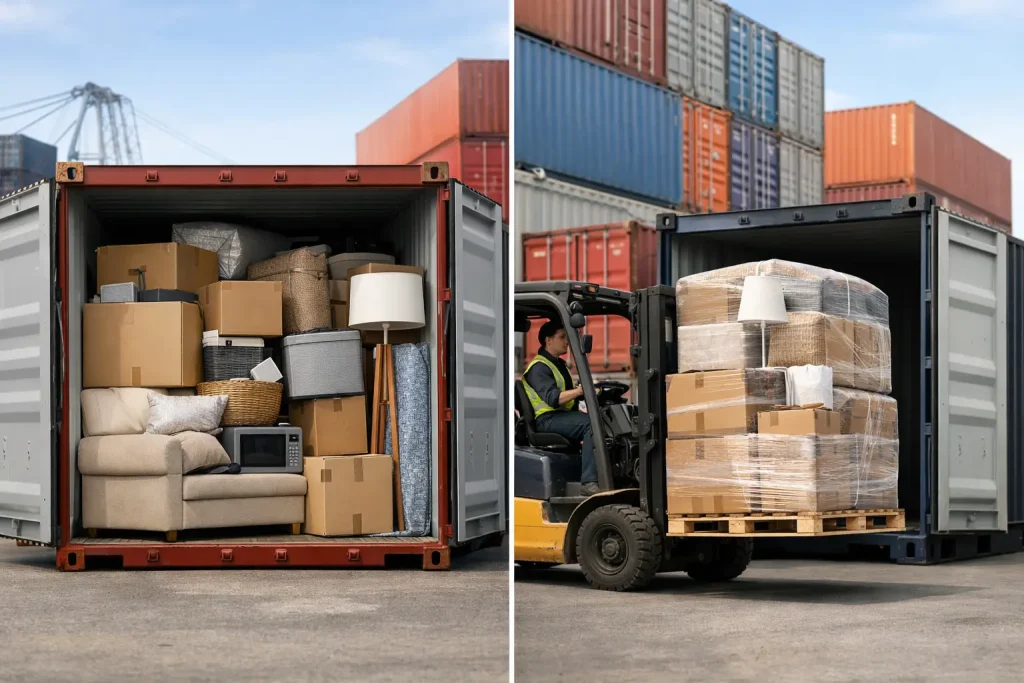
A household move can look simple on paper until the shipping method starts shaping your budget, timeline, and risk. When comparing fcl vs lcl for household move planning, the real question is not which option is better in general. It is which option gives your specific relocation the right balance of cost control, transit protection, and delivery predictability.
For international moves, that choice usually comes down to two ocean freight methods. FCL means Full Container Load, where your shipment uses a dedicated container. LCL means Less than Container Load, where your goods share container space with other shipments. Both are widely used in overseas relocations, but they suit very different moving profiles.
What fcl vs lcl for household move really means
If you are moving a full apartment, a landed home, or a family household with furniture, appliances, and personal effects, FCL often becomes the stronger option. You are paying for container space that is reserved for your shipment, which gives you tighter handling control from origin to destination. That matters because every extra touchpoint in international shipping creates another chance for delay, misrouting, or damage.
LCL is usually chosen when the shipment is smaller. If you are relocating from Singapore with a limited number of boxes, a few pieces of furniture, or selected personal effects, paying only for the volume you use can make financial sense. You do not need to absorb the cost of a full container if your shipment does not justify it.
The mistake many movers make is treating this as a price-only decision. It is not. Cost matters, but so do packing standards, consolidation schedules, customs timing, and the level of control you want over your move.
When FCL is the better choice
FCL is generally the preferred route when volume is high, timing matters, or protection is a priority. For household moves, that often applies to families, corporate assignees with full home setups, and long-term relocations where most belongings are moving together.
The biggest advantage is dedicated space. Your items are packed into one container and remain together throughout the main shipping journey. There is less cargo mixing, fewer warehouse transfers, and fewer handling events compared with a consolidated shipment. For a household move, that usually translates into better protection for furniture, fragile items, and professionally packed cartons.
FCL also tends to offer stronger schedule control. While exact sailing and port conditions still affect timing, you are not waiting for a consolidator to build a shared load. That can make planning easier if you are working around a lease end, a school start date, or a corporate reporting deadline.
There is also a customs advantage in many cases. A full container with one shipper and one consignee is often more straightforward to manage than a shared load that depends on multiple parties being ready for release. If any shipment in a shared container creates issues, LCL timelines can feel the impact more quickly.
FCL is not always the cheapest line item upfront. But once your shipment reaches a certain size, the math can shift fast. Storage, origin handling, destination deconsolidation, and per-cubic-meter charges can make LCL less attractive than it first appears.
FCL makes sense if your move includes more than just boxes
If your inventory includes sofas, beds, dining sets, wardrobes, large TVs, or bulky household goods, container efficiency improves. A full container can be loaded with proper placement, protective wrapping, and a clear loading plan. That gives your move team more control over how the shipment is secured for ocean transit.
For families relocating for several years, this usually aligns with the bigger goal: move once, move properly, and reduce downstream problems.
When LCL is the smarter option
LCL works best when your shipment is selective rather than complete. That may mean a single professional relocating ahead of family, a student move, a temporary assignment, or a household that is shipping only essential items while buying furniture after arrival.
The obvious benefit is paying for the volume you use. If your shipment is small, LCL can be a more efficient spend than booking a full container. For customers who are relocating in stages, this can preserve cash flow while still allowing important personal effects to move by sea instead of more expensive air freight.
LCL can also be practical when flexibility matters more than speed. If you are not trying to hit a tight move-in date, and your shipment is modest in size, the shared-container model may be enough.
The trade-off is handling complexity. LCL cargo is typically consolidated with other shipments, loaded into shared container space, and deconsolidated at destination. More transfers mean more coordination points. That does not make LCL a bad option. It means your packing, documentation, and move management need to be handled with precision.
LCL works well for partial household relocations
Many international moves are not all-or-nothing. Some customers ship a small set of personal items, documents, children’s belongings, and a few sentimental pieces while the rest stays in storage or is replaced overseas. In that situation, LCL is often the practical answer.
What matters is realistic planning. If your move may expand after final packing, the cost gap between LCL and FCL can narrow quickly.
Cost differences: what people often miss
Customers usually begin with one question: which is cheaper? The honest answer is that it depends on shipment volume, origin and destination charges, and how the move is packed and handled.
LCL often looks cheaper at first because you are billed on used volume rather than a full container. But household moves involve more than ocean freight. There can be packing charges, pickup, warehouse handling, export procedures, documentation, destination handling, customs clearance, storage, and delivery. Shared shipments often come with additional consolidation and deconsolidation costs that need to be accounted for.
FCL has a higher base commitment, but once you are moving a substantial household, it can become the more efficient choice overall. It may also reduce the risk of indirect costs tied to delays, repeated handling, or damaged goods.
This is why accurate pre-move surveying matters. A quote based on a rough guess can point you toward the wrong shipping method. A proper volume assessment gives a far better basis for choosing between FCL and LCL.
Transit time and delivery predictability
If timing is a major concern, FCL usually offers the cleaner route. A dedicated container can move through the shipping chain with fewer shared-process dependencies. That does not eliminate port congestion, customs checks, or local delivery scheduling, but it does simplify the shipment structure.
LCL can take longer because consolidation must happen before departure and deconsolidation must happen after arrival. If another shipment in the same container creates a documentation or customs issue, the effects can ripple through the process.
For customers with fixed start dates, family coordination needs, or employer-managed relocation schedules, this difference matters. The lower upfront shipping cost of LCL may not feel like a savings if your household goods arrive later than expected.
Risk, handling, and cargo protection
For a household move, protection is not a side issue. It is central. Furniture, glassware, electronics, artwork, and personal keepsakes do not respond well to repeated cargo movement.
FCL generally offers a lower handling-risk profile because your shipment is loaded once into dedicated space and remains more contained during transit. That is a major advantage for full-home relocations and higher-value household contents.
LCL can still be managed safely, but it demands stricter packing discipline. Export wrapping, carton quality, labeling, inventory control, and professional loading all matter more when goods are moving through shared logistics environments.
This is where a strong relocation partner adds real value. The shipping method is only one part of the result. Survey accuracy, packing execution, customs preparation, and destination coordination are what turn a quote into a successful delivery.
Which option should you choose?
Choose FCL if you are moving a full household, want better shipment control, need stronger schedule predictability, or want to reduce handling exposure. For most family relocations and larger expat moves, it is the more secure and operationally efficient choice.
Choose LCL if your shipment is limited, your timeline is flexible, and you are moving only selected belongings. It is often the right fit for partial moves, smaller household shipments, and customers who need a budget-conscious sea freight option.
The best international movers do not force every customer into the same shipping model. They assess your inventory, destination, customs requirements, and delivery timeline before recommending the method that protects both your budget and your belongings. That is exactly how Astro Movers approaches international relocation planning.
Before you book, make sure your quote is based on actual shipment volume, not assumptions. The right shipping choice should make your move easier to manage, not harder to fix later. A clear plan at the container stage saves time, protects your goods, and gives you one less thing to worry about when the rest of your relocation is already demanding enough.
