
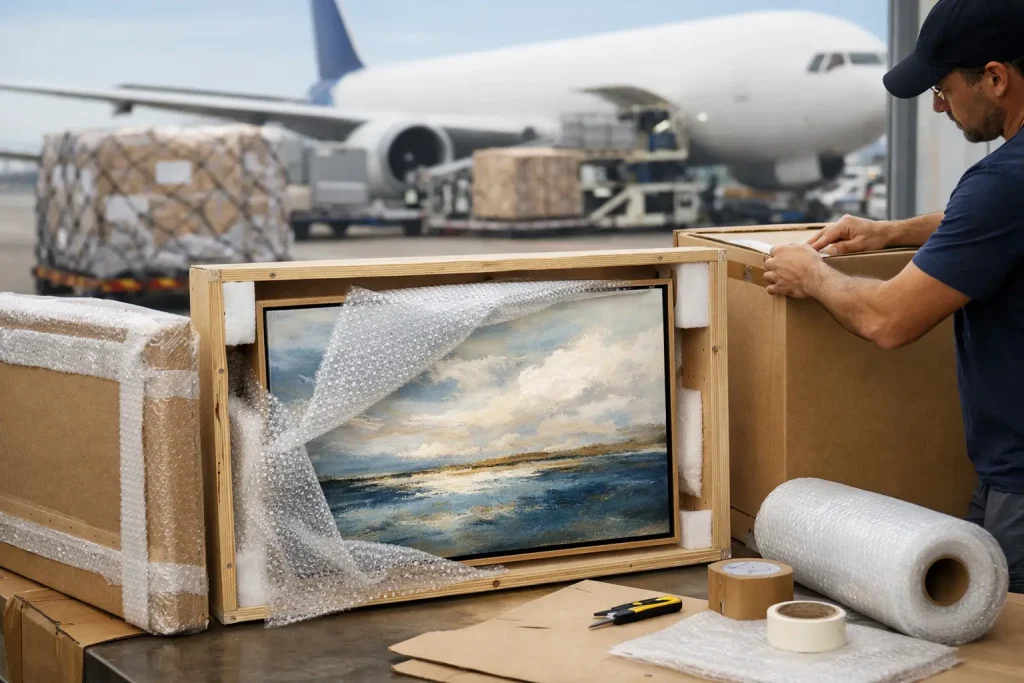
A framed painting can be one of the last items packed for an international move and one of the first items you worry about after departure. Glass can crack under vibration, canvases can puncture, humidity can affect materials, and a shipment held at customs can disrupt an otherwise well-planned relocation. Knowing how to ship artwork internationally means treating it as a specialized freight item, not simply another household box.
For expatriates and families moving from Singapore, the right approach depends on the artwork’s value, dimensions, materials, destination rules, and delivery deadline. A small, unframed print may travel safely by air in a rigid flat pack. A large oil painting, antique frame, or sculpture may need custom crating, climate-conscious routing, marine insurance, and professional customs coordination.
Start With an Artwork Assessment
Before selecting air freight or ocean freight, document every piece. Take clear photographs of the front, back, frame, corners, and any existing marks. Record the artist, title, medium, dimensions, approximate age, purchase price, and declared value. This information supports customs paperwork, insurance applications, and condition checks at delivery.
The material matters as much as the value. Oils and acrylics have different handling needs from works on paper. A stretched canvas can be damaged by pressure against its face, while framed artwork with glass requires protection against both impact and breakage. Sculptures may have fragile projections, uneven weight distribution, or materials that react poorly to temperature changes.
If the item is especially valuable, historic, or irreplaceable, arrange a professional condition report before packing. This creates a reliable baseline if an insurance claim is ever required. It also helps the packing team identify loose paint, fragile varnish, weakened frames, or other conditions that require additional protection.
Choose the Right Packing Method
International shipping exposes artwork to multiple handling points: collection, warehouse movement, export processing, loading, transit, import clearance, and final delivery. Standard bubble wrap and a cardboard box are rarely enough for framed art or original works.
Professional packing begins with a non-abrasive protective layer. The artwork should never have adhesive tape, printed paper, or bubble wrap placed directly against a painted or delicate surface. The face is protected with appropriate barrier material, while corners receive reinforced guards. For glazed frames, a surface-protection system can help contain glass if it breaks during transit.
A rigid double-wall carton may be suitable for lower-risk pieces, particularly prints and smaller framed works. For high-value, oversized, fragile, or antique artwork, a custom wooden crate is usually the safer choice. The crate should allow clearance around the piece, use internal cushioning to prevent movement, and be built to withstand stacking and handling throughout the freight journey.
When a Custom Crate Is Worth the Cost
Custom crating adds cost and weight, so it is not necessary for every piece. It becomes the prudent option when shipping original paintings, artwork with glass, heavy frames, large canvases, sculptures, or pieces traveling by ocean freight. It is also advisable where the replacement cost would be difficult to absorb.
For wood packaging, the crate must meet the destination country’s phytosanitary requirements. Internationally compliant, treated timber is essential. Using noncompliant wood can result in delays, re-export requirements, or extra inspection charges at the border.
How to Ship Artwork Internationally by Air or Ocean
Air freight is usually the best fit for time-sensitive shipments, smaller consignments, and artwork that needs to arrive close to your move-in date. It offers shorter transit times and can reduce the period your item spends in transit. The trade-off is price: air freight is typically more expensive, particularly for large crates that are charged by dimensional weight.
Ocean freight is often more cost-effective for a full household relocation or a collection that can travel with other belongings. It is suitable for crated artwork when the packing is designed for longer transit and changing conditions. Ocean shipments take more time and may encounter port congestion, transshipment, and varying humidity levels, so moisture management and crate quality become even more critical.
For a few valuable items, a shared-container shipment may make financial sense, but it can involve additional handling and a less fixed schedule than a dedicated container. A full container gives greater control over loading and space, particularly when artwork is part of a larger international household move.
The right decision is not simply air versus ocean. It is a calculation of urgency, declared value, size, destination, and the protection level the artwork requires. An experienced relocation provider should explain those choices clearly before your shipment is booked.
Prepare Customs Documents Carefully
Artwork is subject to the import rules of the destination country, and customs classification can vary depending on whether the item is an original work, a reproduction, an antique, or a personal household effect. Incomplete descriptions such as “painting” or “decor” invite questions. A precise inventory makes clearance easier.
Your paperwork may include a packing list, commercial or pro forma invoice, proof of ownership or purchase, passport and visa documents for household moves, and a detailed valuation for insurance. Some destinations require additional declarations for antiques, cultural property, materials derived from protected species, or artworks made with restricted components.
Be particularly careful with pieces that contain ivory, tortoiseshell, animal skin, feathers, certain woods, or other regulated materials. Even a small decorative element can trigger additional review. Antique items and cultural artifacts may need export permission from the country of origin or import approval at destination.
Do not undervalue artwork to reduce duties or taxes. Declaring an unrealistic value can create customs concerns and leave you underinsured if there is a loss. A responsible shipping plan balances compliance, accurate valuation, and destination-specific tax considerations from the start.
Protect the Shipment With Appropriate Insurance
Carrier liability is not the same as full-value insurance. Freight compensation can be limited by weight, package terms, or the carrier’s conditions, which may fall far below the value of an original artwork. Ask for dedicated transit insurance based on the item’s declared replacement or agreed value.
Read the coverage terms before collection. Confirm whether the policy includes door-to-door transit, loading and unloading, water damage, breakage, theft, and storage if your delivery schedule changes. Understand the exclusions as well. Pre-existing damage, poor owner-packed items, gradual deterioration, and inadequate documentation can affect a claim.
Photographs, condition reports, invoices, appraisals, and the professional packing inventory all strengthen your position. If damage is found at delivery, note it immediately on the delivery paperwork and retain all packing materials until the claim process is clarified.
Work With a Single Accountable Move Partner
Artwork shipping becomes more manageable when one provider coordinates packing, crating, freight booking, export documents, customs clearance, insurance support, and delivery. Splitting those tasks among separate vendors can create gaps in responsibility, especially when a customs hold or damage concern arises overseas.
At Astro Movers, international relocation planning is built around the full journey of your belongings, from a pre-move assessment through final placement at destination. For artwork, that means identifying the required protection level early, selecting the most practical shipping mode, and coordinating the paperwork before the shipment reaches the port or airport.
A professional team should also give you realistic timing. Customs clearance cannot always be guaranteed to the day, particularly when destination authorities request additional information. What can be controlled is the quality of the documentation, the packing standard, the freight coordination, and the communication you receive while your shipment is in transit.
Final Checks Before Collection
Before the packing crew arrives, remove artwork from direct sunlight and areas with moisture or cooking fumes. Keep purchase records, appraisal documents, and prior condition reports together. Tell the move coordinator about every valuable piece, even if it seems small, so it is included on the packing and insurance inventory.
For original works, avoid rolling, folding, or disassembling them yourself unless a qualified conservator has confirmed it is safe. Do not place paintings face-to-face, stack framed pieces without separators, or store crated artwork in a damp area while waiting for collection.
Artwork carries financial value, but it often carries personal history as well. Give it the same planning discipline as your passport, relocation documents, and essential household items. With expert packing, accurate paperwork, and a freight plan built for the destination, your collection can arrive ready for the next chapter of your move.
