
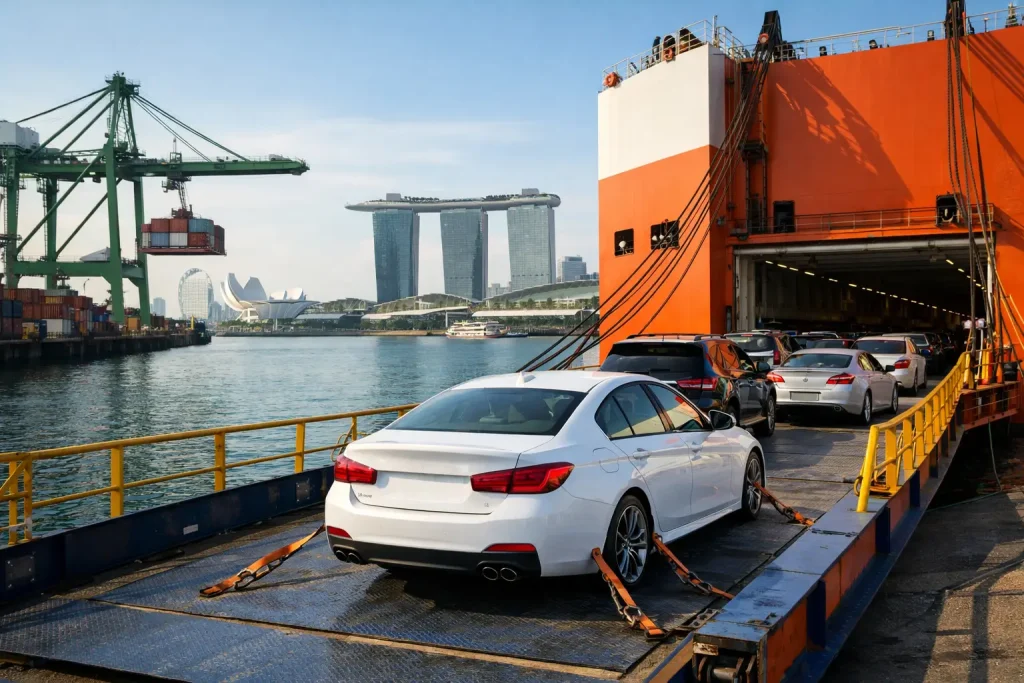
Relocating overseas with a vehicle is rarely a casual decision. For most expats, families, and corporate mobility teams, shipping a car out of Singapore only makes sense when the numbers, regulations, and delivery timeline all line up. This international car shipping from Singapore guide is built to help you evaluate that decision properly – before you commit to freight space, paperwork, and destination-country compliance.
A car shipment is not just another household item in a container. It sits at the intersection of export procedures, port handling, customs rules, marine transit, insurance, and destination registration. When one detail is missed, delays become expensive very quickly. That is why experienced shippers focus less on the lowest quote and more on process control.
When shipping a car from Singapore makes sense
The right choice depends on the car, the destination, and how long you expect to keep it. If you own a higher-value vehicle, a specialist model, or a car that would cost far more to replace in your destination country, shipping can be commercially sensible. The same applies when you are relocating for several years and want continuity rather than buying and selling twice.
There are also cases where shipping does not make sense. Some countries impose high import duties, emissions compliance checks, age restrictions, or modification requirements that can erase any cost advantage. If the vehicle has low resale value, or if local purchase is easier and faster, exporting from Singapore may create more administrative burden than benefit.
A serious shipping plan starts with one question: can this car be legally imported, registered, and insured in the destination country without excessive additional cost? If the answer is uncertain, that issue needs to be settled before booking freight.
International car shipping from Singapore guide to shipping methods
The shipping method affects cost, transit security, handling risk, and flexibility. In most cases, the choice comes down to container shipping or roll-on/roll-off, often called RoRo.
Container shipping
Container shipping is the more controlled option and often the preferred route for customers who want tighter handling standards. The vehicle is loaded into a container, secured, and moved as protected cargo. This method is especially useful for higher-value cars, classic vehicles, or situations where customers want reduced exposure during transit and at transshipment points.
Container shipping also gives more planning flexibility if the car is moving alongside household goods, although that depends on destination rules and packing restrictions. It is generally more expensive than RoRo, but the added control is often worth it for customers who prioritize protection and predictable handling.
Roll-on/roll-off shipping
RoRo is usually the more economical option when available on the lane. The car is driven onto a specialized vessel, secured inside the ship, and driven off at destination. It works well for operational vehicles and common relocation routes with established port infrastructure.
The trade-off is that RoRo offers less physical separation than a sealed container. Availability also depends on vessel schedules and destination-port capability. Some destinations simply offer stronger container options than RoRo frequency.
What determines the total shipping cost
Customers often ask for a single price, but international car shipping is built from several cost components. The ocean freight itself is only one part of the total.
Vehicle dimensions matter because shipping lines charge based on space, and larger vehicles cost more to move. The destination country has a major impact as well. Port charges, customs processing fees, import duties, taxes, and local compliance inspections vary significantly from one market to another.
The shipping method changes the budget, and so does the service scope. A port-to-port shipment will cost less than a managed service that includes collection, export handling, documentation support, destination customs coordination, and final delivery. Insurance is another line item customers should evaluate carefully rather than treat as optional.
Timing can also influence pricing. Tight schedules, congested routes, and peak relocation periods may reduce available sailing options or increase freight rates. A dependable quote should break out the operational scope clearly so you know what is included and where destination-side costs may still apply.
Documents you will usually need
Car shipping succeeds or fails on documentation discipline. While exact requirements vary by country, most shipments require proof of ownership, the vehicle registration details, a copy of the shipper’s passport or identification, and destination-related import documents.
Export and customs paperwork must be matched accurately to the vehicle. Even small discrepancies in chassis number, engine details, owner name, or declared value can trigger inspection delays. Some destinations also require prior import approval before the car even departs Singapore.
This is where a coordinated relocation and freight partner adds real value. Instead of leaving the customer to interpret port, customs, and shipping line requirements alone, a professional team can structure the file correctly from the start and reduce the risk of avoidable compliance issues.
Preparing the vehicle before shipment
A shipped vehicle should be treated as regulated cargo, not as a storage unit on wheels. Most carriers and destination authorities restrict what can remain inside the car. Personal items, loose accessories, and undeclared contents can create customs complications and may affect insurance coverage.
The vehicle should be cleaned and inspected before handover. This makes condition reporting more reliable and helps identify any pre-existing marks or damage. Fuel levels may need to be limited depending on the shipping method and carrier instructions. Battery condition, alarm settings, and key availability also need to be managed properly before loading.
Photographic condition records are a practical safeguard. A clear pre-shipment inspection report supports accountability at every transfer point.
Customs and destination compliance are where most delays happen
Shipping out of Singapore is only half the task. The real pressure often begins at destination, where local import rules determine whether the car can be released quickly, held for inspection, or rejected from registration.
Some countries impose age limits on imported vehicles. Others require left-hand-drive or right-hand-drive compatibility, emissions certification, safety modifications, or proof that the vehicle meets local standards. Taxes can include duty, value-added tax, goods and services tax equivalents, luxury taxes, or environmental levies.
That is why experienced shippers do not promise a one-size-fits-all process. The correct advice is always destination-specific. A well-managed shipment is built around the actual import conditions of the receiving country, not generic assumptions.
Transit times and scheduling expectations
Transit time is shaped by route, vessel frequency, port congestion, customs clearance, and inland delivery arrangements. Even when the sea leg is straightforward, documentation review or destination inspections can extend the overall timeline.
Customers should plan for a full logistics window rather than focusing only on sailing days. Collection, export preparation, port cut-off dates, loading, transit, arrival processing, customs release, and final delivery all sit within the real schedule. For corporate moves and family relocations, that distinction matters because the vehicle often arrives later than household essentials.
Strong planning means aligning the car shipment with your broader relocation timeline. If the destination country has strict import processing or registration lead times, shipping too early can be just as inconvenient as shipping too late.
Choosing a shipping partner without taking unnecessary risk
The safest provider is not simply the one with freight access. You need a company that can manage the shipment as a controlled relocation project. That means clear scoping, documentation oversight, cargo handling standards, customs coordination, and a reliable chain of accountability from origin to destination.
Ask how the vehicle will be inspected, how loading is controlled, what insurance support is available, and who manages destination-side coordination. If the answers are vague, the risk usually sits with the customer.
This is where an integrated operator has an advantage. A company such as Astro Movers can align vehicle shipping with broader international moving services, giving customers one accountable partner for planning, freight coordination, customs support, and delivery management rather than fragmenting responsibility across multiple vendors.
Common mistakes to avoid
The most expensive mistake is assuming that shipping approval and import approval are the same thing. They are not. A car can be shipped successfully and still face major destination problems if import rules were not checked in advance.
Another frequent error is comparing quotes that cover different service levels. One price may include export handling and documentation support, while another excludes destination fees, customs work, or delivery. If the scope is not aligned, the comparison is misleading.
Customers also underestimate the role of insurance. Marine transit involves multiple handling points, and proper cargo protection should be considered part of responsible planning, not an optional afterthought.
A practical decision test before you book
If you are deciding whether to move a vehicle overseas, test the shipment against four factors: import legality, total landed cost, expected timeline, and replacement economics at destination. When all four support the move, shipping can be a smart and efficient decision. When one of them is weak, it is better to know early and adjust your plan.
The best car shipment is not the one that leaves port fastest. It is the one that arrives compliantly, clears without avoidable delay, and reaches you in the expected condition. If you approach the process with that standard, you will make better decisions from the first quote onward.
