
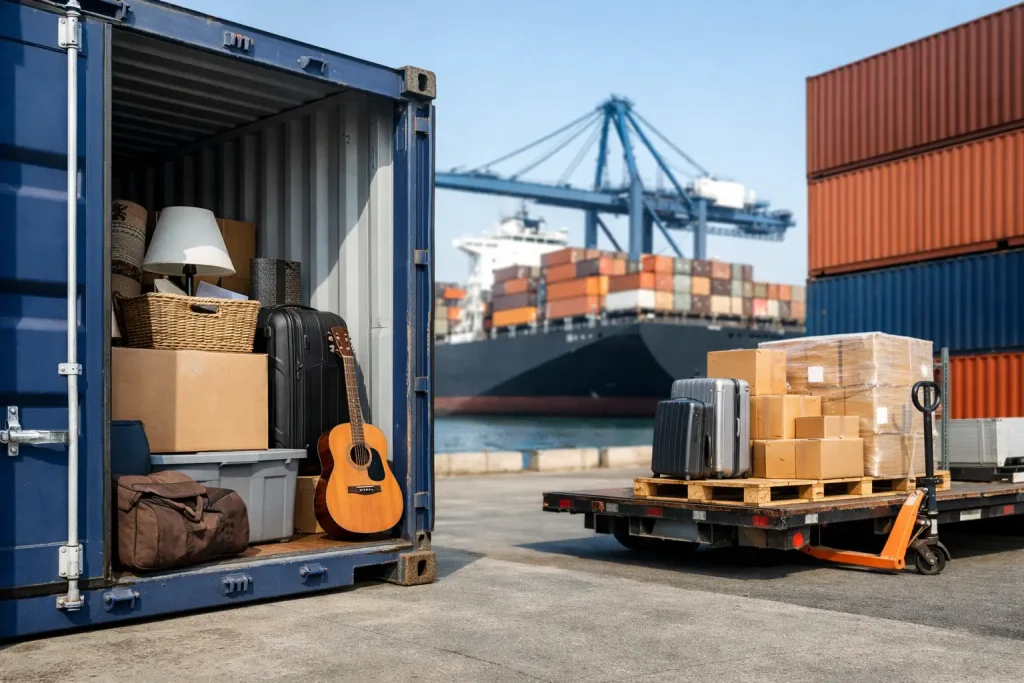
If you are not moving an entire household, paying for a full container rarely makes sense. That is where partial container shipping for personal effects becomes the practical choice. It gives expatriates, families, and corporate assignees a way to move selected belongings internationally without taking on the cost and complexity of booking space they do not need.
For many Singapore-origin relocations, the move is not all or nothing. A professional might ship work essentials, a few boxes of household items, and personal records ahead of a later family move. A student may need books, clothing, and a small amount of furniture. A family returning home may only want sentimental items, baby gear, or excess belongings shipped separately after a downsizing decision. In these cases, partial container service fits the shipment instead of forcing the shipment to fit the container.
What partial container shipping for personal effects actually means
In simple terms, this service allows your belongings to travel in shared container space rather than in a dedicated full container booked only for your shipment. You pay for the volume or space your goods occupy, not the entire container. That makes it an efficient option for smaller international moves, staged relocations, and households that are intentionally shipping less.
This is often described as a shared container or consolidated ocean freight arrangement. The exact operating model can vary by route, destination, transit schedule, and cargo handling requirements. What should not vary is control. Your mover should still manage packing standards, inventory preparation, export handling, shipping coordination, customs documentation, and destination delivery with the same discipline used for larger moves.
That point matters. Smaller shipment size should not mean lower service standards.
When this option makes financial sense
The strongest advantage of partial container shipping for personal effects is cost efficiency. If your shipment does not justify a full container, shared space helps avoid overpaying for unused capacity. For many customers, that is the difference between shipping what matters and abandoning useful or valuable belongings.
Still, lower cost does not mean it is always the right answer. Ocean consolidation can involve additional handling milestones because multiple shipments are grouped, loaded, and separated at different points in the process. That can affect transit timing. If speed is the priority, air freight may be better for a very small shipment. If privacy, exclusive use, or a high shipment volume is the priority, a full container may be the stronger fit.
The right choice depends on three factors: how much you are shipping, how quickly you need it delivered, and how tightly you need to control the delivery window. A reliable mover will assess those trade-offs before recommending a service package.
Who typically uses partial shipping
This shipping model works well for customers who are moving just a portion of their home. That includes expats on assignment, employees relocating first and bringing family later, students, retirees downsizing internationally, and families sending overflow items after a primary move.
It is also useful for customers who want to avoid rushed decisions. Instead of forcing everything into one shipment, they can move essential personal effects first, then send the balance once housing, storage, or long-term plans are confirmed. That flexibility reduces pressure, especially when lease dates, school schedules, or immigration timelines are still moving.
Corporate mobility teams also benefit from partial shipments. When an assignee is deployed with a limited allowance or a temporary housing plan, a smaller ocean freight shipment can align better with policy and budget than a full household move.
What can be included in a shipment
Most personal effects shipments include clothing, books, kitchenware, linens, decorative items, toys, electronics, and selected furniture pieces. In some cases, bicycles, art, or specialty household goods can also be included, provided they are properly packed and declared.
What cannot or should not be shipped depends on destination-country rules and carrier restrictions. Hazardous materials, certain batteries, perishables, flammables, controlled goods, and prohibited personal items may be restricted or refused. Customs regulations also vary. An item acceptable for export from Singapore may still face import limitations at destination.
That is why pre-move assessment matters. A serious international mover does not wait until packing day to flag customs-sensitive items. The correct process starts with volume review, item screening, and documentation planning before anything is sealed for export.
Packing standards matter more than many customers expect
With shared container movements, professional packing is not optional if you want real protection. Personal effects may pass through collection, warehouse handling, container loading, ocean transit, destination deconsolidation, customs inspection, and final delivery. Every stage increases the importance of proper wrapping, carton strength, labeling, and inventory control.
Fragile items need cushioning suited to long-haul freight conditions, not just local transport. Furniture may need export wrapping or crating depending on size and finish. Electronics should be protected against movement and stacking pressure. Cartons should be clearly marked and matched against a detailed packing list.
This is one reason customers choose a full-service international mover rather than trying to self-pack a cross-border shipment. A lower shipping bill can quickly lose its appeal if poor packing leads to preventable damage, customs delays, or missing-item disputes.
Customs is where good planning proves its value
Customs clearance is often the least visible part of an international move until it causes a delay. For partial shipments, documentation accuracy is especially important because shared-container movements depend on coordinated cargo processing. Incomplete forms, vague item descriptions, or mismatched paperwork can hold up delivery.
Depending on destination, customers may need passport copies, visa or work permit evidence, proof of residence, inventory lists, declarations of used household goods, or tax-related import forms. Some countries offer duty relief for used personal effects under specific residency conditions. Others apply stricter import controls or inspection requirements.
There is no universal rulebook that applies equally across every route. That is why customers moving internationally need one accountable partner to manage documentation guidance, customs coordination, and shipment status from origin through final handover. Astro Movers is built around that model, combining moving execution with freight coordination so customers are not left managing separate vendors across the move.
Transit times and scheduling – what to expect
One of the most common questions is whether partial container service is slower than a full container move. The honest answer is: often yes, but not always by a dramatic margin. Consolidation requires cargo to be grouped and scheduled, and destination handling may involve sorting before release and delivery.
That does not make it unreliable. It simply means expectations should be set correctly from the beginning. Customers who need exact day-specific delivery for all household goods may prefer a dedicated container or a hybrid plan using air freight for essentials and ocean freight for the rest. Customers focused on value and structured coordination usually find shared container shipping a strong fit.
The quality of scheduling also depends on route density. Popular expat corridors generally offer stronger consolidation opportunities and more predictable sailings than lower-volume lanes.
How to decide if this is the right move strategy
The best decision starts with shipment volume, but it should not end there. Think about your housing arrangement at destination, your tolerance for phased delivery, your customs status, and whether the items being shipped are replaceable or personally important.
If you only need a practical set of household goods and personal items moved cost-effectively, partial shipping is often the right answer. If you are relocating a full family residence with fixed delivery requirements, a dedicated container may provide better control. If your shipment is very small and urgent, air freight can outperform ocean shipping despite the higher cost per unit.
A proper consultation should compare these options rather than pushing a one-size-fits-all answer. The strongest relocation partner will explain where you save, where you compromise, and what you can do to reduce risk before booking.
Why service integration matters
International moving gets more complicated when packing, freight, customs, and delivery are split across different providers. Accountability becomes blurred fast. If something slips, customers end up coordinating the gaps.
That is why experienced movers position partial container service as part of a managed relocation process, not just freight space for sale. Consultation, volume survey, professional packing, export handling, shipping coordination, customs clearance support, and final delivery should operate as one connected chain. That structure protects timelines, protects belongings, and reduces the amount of oversight required from the customer.
For expats and families already managing visas, schools, housing, and travel dates, that kind of control is not a luxury. It is the difference between a move that stays organized and one that creates weeks of avoidable friction.
If your move is smaller than a full household but still too important to leave to chance, partial container shipping can be the smart middle ground – cost-conscious, structured, and fully manageable when handled by the right international moving team. The best next step is simple: get your shipment assessed properly before you decide what should travel, when it should move, and how much service control you want around it.
