
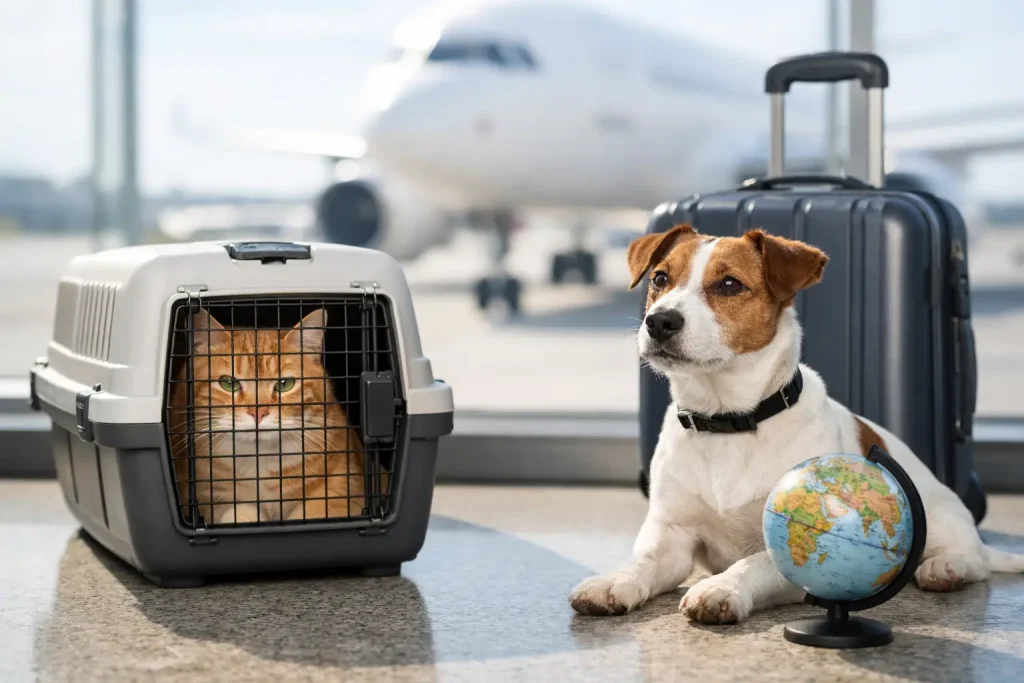
A job offer, family move, or overseas assignment can put a departure date on the calendar quickly. Your pet’s travel timeline cannot be handled the same way. Learning how to relocate pets internationally means coordinating veterinary requirements, import permits, airline capacity, customs procedures, and your household move well before packing day.
For families leaving Singapore, the safest approach is to treat pet relocation as a regulated logistics project, not a last-minute flight booking. Every destination has its own rules, and a missed document, incorrect microchip record, or delayed blood test can result in refused entry, costly boarding, or quarantine.
How to relocate pets internationally: start with destination rules
Your destination country sets the standard for your pet’s entry. Breed restrictions, vaccination requirements, parasite treatments, import permits, and quarantine policies can differ significantly, even between nearby countries. Australia and New Zealand, for example, have highly controlled import processes. Other destinations may have shorter waiting periods but still require official health documentation endorsed by the appropriate government authority.
Start by confirming the rules for the country where your pet will land, not just the country where your flight connects. If you are relocating to the United States, the requirements may also vary by state, airline, and the pet’s country of origin. If you are traveling onward after arrival, check the rules for that final destination as well.
Timing is the issue that catches many owners out. Some countries require rabies antibody testing after vaccination, followed by a waiting period that can extend for months. An import permit may be valid only for a specific entry date or a short travel window. Build your pet’s schedule backward from your planned arrival date, then allow extra time for appointments, laboratory results, government endorsements, and possible changes to airline schedules.
Confirm your pet’s health and identification records
A compliant microchip is usually the foundation of international pet travel. The microchip number must match every document, including vaccination certificates, laboratory reports, export paperwork, and import permits. A mismatch of even one digit can create problems at inspection.
Ask your veterinarian to scan the chip before each major appointment and verify that it meets the destination country’s required standard. Then confirm the sequence of required treatments. In many cases, the microchip must be implanted before the rabies vaccination is given for that vaccination to count toward import eligibility.
Your veterinarian will guide the clinical side of the process, but owners should keep a complete, organized file. This should include the microchip record, rabies certificate, other vaccination records, test results, treatment certificates, import permit, and copies of your pet’s passport or travel documents where applicable. Keep digital copies as well as printed copies in your hand luggage.
A final health examination is commonly required shortly before departure. The permitted timeframe may be as short as a few days, so do not schedule it before you have confirmed the airline’s departure time and the destination’s document rules. Health certificates also frequently need official endorsement after the veterinary appointment. That step is separate from the examination and should never be assumed.
Choose the right travel method for your pet
Most pets travel internationally by air, either in the cabin, as accompanied baggage, or as manifested cargo. The right option depends on your pet’s size, airline policy, route, destination rules, and whether you are traveling on the same flight.
Small pets may be accepted in the cabin on selected routes, but space is limited and not all countries allow cabin entry. Larger dogs usually travel in an airline-approved crate in a temperature-controlled, pressurized section of the aircraft. When a pet must travel as cargo, booking through an experienced pet relocation coordinator can help manage the required reservations and handover procedures.
Do not choose a route solely because it appears cheaper. A direct flight can reduce handling and transit stress, but it may not always be available. If a connection is necessary, check the transit country’s pet rules, the minimum connection time, and whether the airline can transfer the pet through its own network. Changing airlines during transit can introduce additional clearance, collection, and re-check-in requirements.
Weather restrictions also matter. Airlines may limit pet travel during periods of extreme heat or cold, particularly where aircraft are loaded outdoors. Snub-nosed breeds can face further restrictions because of respiratory risk. The airline’s decision is based on animal welfare and operational safety, so always have a backup travel date if your move schedule allows it.
Select and prepare an airline-approved travel crate
The travel crate is your pet’s protected space throughout check-in, flight handling, and arrival inspection. It must meet the airline’s current specifications for size, construction, ventilation, door security, absorbent bedding, and water containers. A crate that is too small may be refused at check-in.
Your pet should be able to stand without crouching, turn around comfortably, and lie down in a natural position. Label the crate clearly with your pet’s name, your contact details, destination address, and emergency contacts. Attach copies of essential paperwork in a document pouch where required, but keep the originals with you.
Crate training should begin well before travel. Leave the crate open at home, place familiar bedding inside, and encourage short, positive periods of rest in it. The goal is not to make the crate exciting. It is to make it familiar and calm.
Avoid sedating your pet unless a veterinarian gives specific instructions and the airline accepts it. Sedation can affect breathing, balance, and temperature regulation at altitude. Airlines and veterinarians generally prefer a well-prepared pet traveling alert in a properly sized crate.
Plan the departure day around pet welfare
International departure procedures can take longer than expected. Confirm the cargo terminal or check-in location, reporting time, document requirements, and crate inspection process in advance. Cargo facilities are often separate from passenger terminals, so build enough time into your journey.
Feed your pet a light meal according to veterinary guidance, allowing sufficient time before travel. Offer water and provide an approved water container that can be refilled from outside the crate. Exercise your dog before leaving for the airport, but avoid exhausting activity in hot weather.
Keep the day calm. Your pet will pick up on rushed, anxious handling. Use a secure harness or carrier during transfers, and do not remove your pet from the crate in uncontrolled public areas. At the handover point, confirm that the crate labels and paperwork match the booked flight details.
Prepare for customs clearance and possible quarantine
Arrival does not always mean immediate release. Depending on the destination, your pet may be inspected by animal health authorities, transferred to a quarantine facility, or cleared through customs before being released to you or your appointed agent.
Quarantine is not necessarily a sign that something has gone wrong. In some countries, it is a standard part of the import process. What matters is that you reserve any required quarantine space early, meet the arrival appointment procedures, and ensure the pet’s documents are complete before departure.
For destinations with more straightforward entry procedures, customs clearance can still be delayed if original documents are missing or if flight details do not match the import permit. A professional relocation plan accounts for these handoffs, including airport collection, customs presentation, and transport from the arrival terminal to your new home.
Coordinate your pet with the rest of your move
Pet relocation should sit alongside your household moving schedule, not outside it. Your new home needs to be ready for your pet’s arrival, with suitable food, bedding, medication, and a secure area to settle. If your household shipment will arrive later, carry enough familiar supplies to cover the first weeks.
Families should also consider temporary accommodation. Many hotels and serviced apartments have pet policies, size limits, or restricted areas. Confirm these details before booking, particularly if quarantine or customs timing could change your arrival plan.
Astro Movers helps international households coordinate complex cross-border moves with one accountable relocation partner. When pet travel, household packing, shipping dates, customs paperwork, and destination delivery are planned together, there are fewer gaps between one major task and the next.
Your pet may need several days or weeks to adjust after international travel. Keep routines simple, monitor eating and drinking, arrange local veterinary care, and give them a quiet place to decompress. The best relocation plan does more than get your pet on the plane – it gives them the safest possible start in their new home.
