
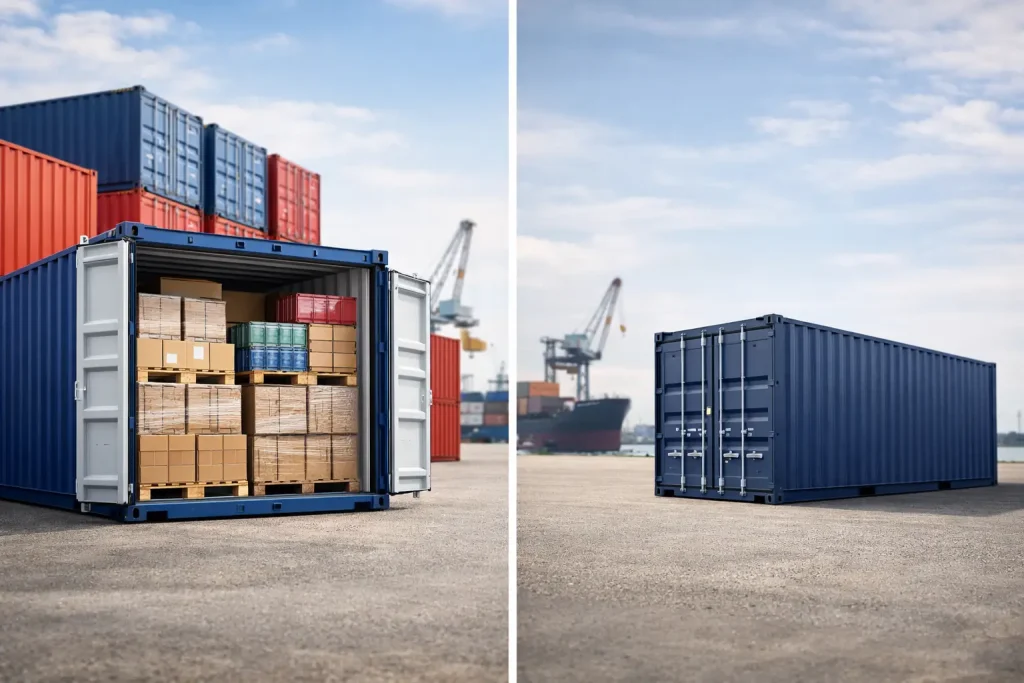
A lower freight price can look attractive until your move needs a fixed sailing date, extra loading space, or a faster release at destination. The shared container versus sole container decision affects far more than the ocean freight line on your quote. It shapes how your belongings are packed, when they can depart, how much control you have over the shipment, and what happens once it reaches the destination port.
For international moves from Singapore, there is no universal best option. A small apartment move headed to London may be well suited to a shared container. A family relocating to the United States with a full household, a tight handover date, and valuable furnishings may need a sole container. The right choice starts with an accurate assessment of volume, destination requirements, timeline, and budget.
What Is a Shared Container?
A shared container shipment, often called less-than-container load or LCL, combines your packed belongings with shipments from other customers traveling to the same destination region. Rather than paying for an entire ocean container, you pay for the space your goods occupy, along with the handling required to consolidate and separate the shipment.
This option is designed for customers who are moving a limited volume. It can work well for a studio or one-bedroom apartment, a partial household move, or customers who are sending only selected belongings ahead of a later move. If you are relocating with a few cartons, personal effects, furniture pieces, or items that are not practical to send by air freight, shared container service can provide a sensible middle ground.
The cost advantage is real when your shipment is small. However, shared shipping involves additional warehouse handling. Your belongings are collected, professionally packed, delivered to a consolidation facility, loaded with compatible cargo, then separated again at the destination. Those touchpoints make proper export packing, detailed inventory control, and protective wrapping essential.
When shared shipping is the practical choice
Shared container service is generally appropriate when you have flexibility on timing and your shipment does not justify the cost of exclusive container space. It is also useful when you are still deciding what to take overseas and want to move only the items that matter most.
Customers should plan for a broader collection-to-delivery window. A shared container cannot depart until there is sufficient compatible cargo for consolidation and the shipment is scheduled onto an available sailing. At destination, deconsolidation, customs procedures, and local delivery scheduling can add further time. This does not mean shared shipments are unmanaged. It means the schedule has more operational dependencies than a dedicated container move.
What Is a Sole Container?
A sole container shipment means one customer has exclusive use of the container. This is commonly referred to as full-container load or FCL shipping. Depending on the size of the move, a household may use a 20-foot or 40-foot container, subject to route availability, cargo volume, and loading requirements.
With a sole container, your household goods are packed and loaded for your move only. Once the container is sealed, it proceeds through export handling and is shipped under a schedule built around that dedicated booking. There is no need to wait for other customers’ cargo to fill the remaining space.
For larger relocations, this can deliver better value than paying shared-shipment rates by volume. It also gives families, corporate transferees, and office move managers greater control over the loading plan. Furniture, cartons, artwork, electronics, and other goods can be arranged strategically to maximize space and protect high-risk items during transit.
When a dedicated container earns its cost
A sole container is often the stronger option for a two- to four-bedroom household, a large family move, an office relocation, or a shipment that includes substantial furniture and equipment. It is also the preferred route when timing is less flexible, provided carrier schedules and customs requirements support the planned departure.
Exclusive use does not mean every part of the move is instant. Port congestion, vessel changes, weather, inspections, and destination customs clearance can still affect transit. What it does provide is a more direct operational path: your cargo is not waiting on other shipments to be consolidated or separated.
A sole container can also reduce handling compared with a shared shipment. Fewer transfer points generally mean fewer occasions for goods to be moved, although professional packing remains non-negotiable. A container loaded poorly can allow furniture to shift, cartons to compress, and fragile items to face avoidable risk regardless of whether the container is shared or dedicated.
Shared Container Versus Sole Container: Key Differences
The first difference is pricing. Shared shipping usually costs less for low-volume moves because you pay for used space rather than a full container. As your shipment volume grows, the comparison changes. The combined cost of shared freight, consolidation, destination deconsolidation, and handling can approach or exceed the cost of a dedicated container.
The second difference is timing. Sole-container shipping typically offers more predictability because the shipment can be booked once your container is ready. Shared shipping may involve a longer overall timeline due to consolidation and deconsolidation. If you need your belongings soon after arriving at your new home, this distinction deserves serious attention.
The third difference is handling. Shared shipments are handled more frequently as they are combined and later separated. A sole container remains packed as one household shipment from origin loading through destination release. Both options can be safely managed with professional materials, proper export packing, clear labeling, and careful inventory control, but the handling profile is different.
The fourth difference is space efficiency. A sole container may leave unused space if your shipment is smaller than expected. A shared container avoids paying for that unused capacity. Conversely, trying to force a large household move into shared service simply to reduce the headline price can create a less efficient and more expensive result.
How to Choose the Right Shipping Method
Start with a professional pre-move survey or a detailed inventory review. The decision should be based on cubic volume, not guesswork from the number of rooms in your home. Two apartments of the same size can have very different shipment volumes depending on furniture, storage items, sports equipment, appliances, and whether you are shipping a vehicle or specialized goods separately.
Your required delivery date matters just as much as volume. Consider when your lease ends in Singapore, when you must vacate your property, when your new residence will be available, and whether you can live temporarily with essential items only. If your schedule has little room for movement, a sole container may justify the higher initial price.
Also consider destination customs and delivery conditions. Some countries require detailed documentation, inspections, or specific declarations for household goods. If you are moving into a building with restricted delivery hours, narrow access, or elevator booking requirements, the destination delivery plan needs to be coordinated early. Freight selection and final-mile execution should work as one move plan, not as separate decisions.
For corporate relocations, the choice may be influenced by policy allowances, employee start dates, and the need for consistent reporting. A managed move program benefits from one accountable provider that can coordinate survey, packing, freight booking, customs documentation, insurance options, and delivery communication.
Do Not Compare Quotes by Freight Price Alone
A meaningful quote comparison should identify the services included at both origin and destination. Ask whether the proposal covers export packing, collection, warehouse handling, documentation, port charges, customs clearance support, deconsolidation where applicable, destination delivery, and unpacking or debris removal if needed.
Insurance should also be discussed before packing begins. International shipping carries risks that no mover or carrier can completely eliminate, including rough seas, handling incidents, delays, and inspection-related disruption. A clear valuation and insurance conversation helps you decide what protection is appropriate for the belongings you are sending.
Be cautious of vague volume estimates and unusually low rates that do not explain destination charges. International moves are interconnected logistics projects. A quote that leaves out required handling or local delivery costs can create unwelcome surprises after your shipment has already departed.
Build the Move Around Your Real Priorities
The best option is the one that protects your belongings, supports your required timeline, and gives you a clear view of the total move cost. Shared container service is often the smart, cost-conscious choice for smaller shipments. A sole container is often the stronger operational choice for full households, larger volumes, and moves where control matters more than spare capacity.
Astro Movers can assess your shipment, explain the practical trade-offs, and coordinate packing, freight, customs, and destination delivery under one managed relocation plan. Before booking, provide a complete inventory and your target move dates. That early clarity gives your relocation team the information needed to recommend a shipping method that works for the life you are moving into, not just the cargo you are moving out.
