
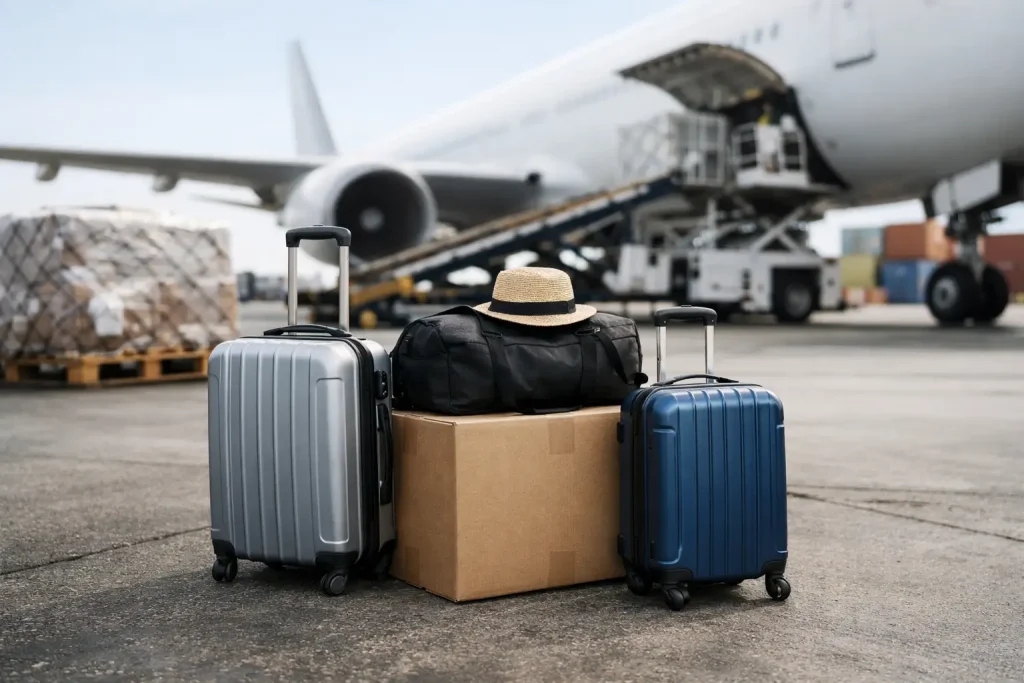
Your flight allowance can only carry so much. Once you are moving overseas with extra clothing, books, baby equipment, kitchen essentials, or personal items you need after arrival, airline excess baggage quickly becomes expensive and difficult to manage. This guide to unaccompanied baggage shipping explains how to send those items separately while keeping control of cost, timing, customs, and delivery.
Unaccompanied baggage is not a substitute for the suitcase you need at the airport. It is a planned shipment of personal effects that travels by air freight or ocean freight without you on the same flight. For Singapore-based expatriates, it is often the most practical option between carrying everything as checked baggage and arranging a full household container move.
What unaccompanied baggage shipping is
Unaccompanied baggage shipping is designed for personal belongings that are not traveling with you but are intended for your own use at your destination. A shipment may be a few cartons, several suitcases, or a small pallet of carefully packed household goods. The right method depends on how much you are shipping, how quickly you need it, and the import rules in the destination country.
Air freight is generally the better choice for a smaller shipment that must arrive soon after you do. It is faster, but pricing is based on chargeable weight, which considers both actual weight and the space your cartons occupy. Bulky but lightweight items can cost more than expected.
Ocean freight is usually more economical for larger volumes or non-urgent belongings. It takes longer, and schedules can be affected by port congestion, vessel availability, and destination handling. For an overseas assignment or long-term relocation, this trade-off can make good financial sense when you do not need every item immediately.
The key distinction is that unaccompanied baggage is still an international shipment. It requires proper packing, itemized documentation, customs review, and coordinated delivery. Treating it like a few extra suitcases can lead to delays, unexpected charges, or customs questions at destination.
When unaccompanied baggage makes sense
This service works particularly well for professionals relocating ahead of their families, students beginning a longer course abroad, and families waiting for permanent housing before sending a larger household shipment. It also suits people moving from Singapore with only a limited number of personal effects.
It may not be the best option if you need the shipment within a day or two. In that case, checked baggage may be worth the premium for essential items. It is also not ideal for high-value items that should remain in your personal possession, such as passports, cash, jewelry, irreplaceable documents, laptops, prescription medication, or critical work equipment.
A practical plan separates items by urgency. Your travel bags should contain documents, medication, a change of clothes, chargers, and essentials for the first week. Your unaccompanied baggage can carry the items that will make settling in easier but are not required at the airport. Everything else can move later by ocean freight or as part of a full relocation shipment.
Start with destination rules, not packing boxes
Customs requirements vary sharply by country. Some destinations allow returning residents or new residents to import used personal effects duty-free under specific conditions. Others require proof of residency, a work visa, a passport, an inventory, or a signed declaration before customs will release the shipment.
A shipment can also be delayed when it arrives before the consignee has the required immigration status or local address. This is common for employees beginning a new assignment. If your entry documents, work pass, or destination lease will not be ready, discuss shipment timing before booking freight.
Your inventory must be accurate and understandable. “Personal effects” is not enough on its own. Customs authorities want a sensible description of what is inside, such as used clothing, books, kitchenware, toys, linens, or used sporting equipment. Values should be realistic, even for used goods. Under-declaring can create a bigger problem than the duty you hoped to avoid.
Certain goods commonly require special attention or should be left out entirely:
- Batteries, power banks, and some electronics may face air freight restrictions.
- Alcohol, tobacco, food, plants, seeds, and animal products can require permits or attract duties.
- Aerosols, perfumes, paints, fuels, and cleaning chemicals may be treated as dangerous goods.
- Weapons, replicas, controlled items, and restricted publications can be prohibited.
- New items in original packaging may be viewed as commercial goods rather than used personal effects.
Do not pack first and ask later. A professional relocation coordinator should confirm the applicable rules for your route and advise which items need to be declared, removed, or shipped through another method.
How to prepare a shipment that travels safely
Good packing protects more than the contents. It helps prevent customs inspections, warehouse handling damage, and delivery disputes. Cartons should be strong, clean, and suitable for international transport. Overloaded boxes can split under stacking pressure, while poorly filled boxes can collapse or allow contents to shift.
Pack by category where possible and cushion breakable items individually. Clothing and linens can fill gaps around sturdier belongings, but they should not be used as the only protection for glass, ceramics, or electronics. Original manufacturer packaging is useful when available, especially for small appliances.
Every carton should be numbered, and that number should correspond with your inventory. For example, Carton 4 can be listed as “used kitchen utensils, plates, bowls, and cookware.” This makes it easier to answer customs questions and identify priority cartons when delivery takes place.
Professional packing is especially valuable for fragile goods, awkwardly shaped items, and shipments traveling by ocean freight. Export-standard materials, proper wrapping, and clear labels reduce risk across multiple handling points. Astro Movers can coordinate packing, freight booking, documentation, customs clearance, and final delivery under one accountable move plan.
Understand the price before you commit
A quote for unaccompanied baggage shipping should be more than a freight figure. International moves involve origin handling, packing if required, export documentation, freight charges, destination handling, customs clearance support, and delivery. Depending on the route and service level, storage, inspection fees, duties, taxes, or remote-area delivery may also apply.
Ask whether the quote is based on estimated or confirmed weight and volume. Air freight charges can change after the shipment is measured. Ocean freight may be priced by cubic volume, with minimum shipment sizes and destination charges that matter more for very small consignments.
The lowest initial quote is not always the lowest total cost. A clear quote identifies what is included at origin and destination, what customs-related expenses remain payable by the shipper, and which charges only arise if customs selects the shipment for inspection. This clarity gives you a realistic budget and avoids unpleasant surprises after your bags have already departed.
Insurance should be considered separately from carrier liability. Standard transport liability may be limited and may not reflect the replacement value of your belongings. If you are shipping items you would struggle to replace, ask about transit protection and make sure the declared values are complete before collection.
Plan the timeline around your arrival
The most effective unaccompanied baggage shipments are scheduled backward from the date you need the goods. Allow time for packing, collection, export processing, freight transit, customs clearance, and final delivery. Air freight may be faster in transit, but customs and local delivery still take time. Ocean freight requires a wider window, particularly during peak moving periods.
Avoid sending everything too early if there is no one at destination to receive it or complete customs formalities. Storage can be arranged when necessary, but it adds cost and can complicate release. Conversely, waiting until the final week before departure can limit available flight space or sailing options.
Share accurate contact details, your destination address if available, and copies of immigration documents promptly. Customs teams cannot clear a shipment without timely responses from the consignee. For corporate relocations, an organized mobility team can help align shipment dates with onboarding, housing, and visa milestones.
A controlled move starts with the right shipment plan
Unaccompanied baggage shipping is most effective when it is treated as part of your relocation plan, not an afterthought at the airport. Send essentials with you, document personal effects clearly, choose air or ocean freight based on real timing needs, and work with a provider that can manage the shipment through delivery. A well-planned small shipment can give you a more comfortable first month abroad while keeping your larger move, budget, and customs obligations under control.
