
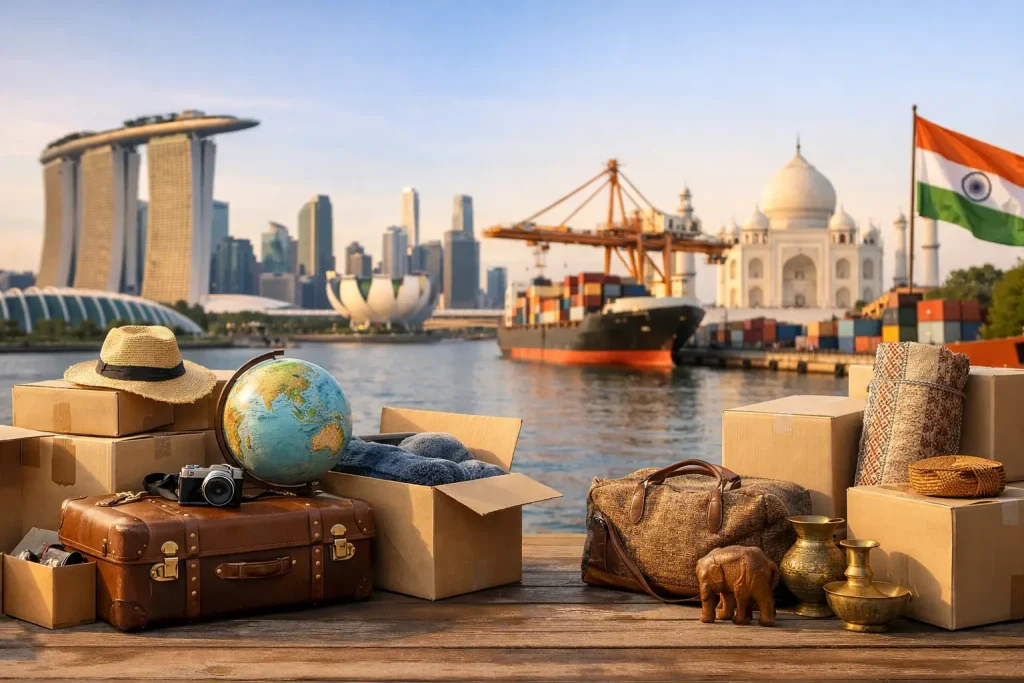
If you are shipping personal effects Singapore to India, the biggest mistakes usually happen before a single box is packed. People underestimate documentation, pack items that trigger customs scrutiny, or choose a shipping method that does not match their timeline. The result is predictable – delays, extra charges, and unnecessary stress at destination.
A well-managed move from Singapore to India is not just about transport. It is about planning volume correctly, preparing a compliant shipment, and making sure your goods move under the right paperwork from pickup through delivery. For expatriates, returning residents, families, and corporate transferees, that level of control matters more than a low headline rate.
What shipping personal effects Singapore to India actually involves
Personal effects shipments typically include used household goods, clothing, books, kitchenware, toys, small appliances, and other belongings for personal use. That sounds simple, but international shipping into India sits at the intersection of freight handling, customs clearance, and local delivery coordination.
That is why this move should be treated as a managed relocation service, not a casual courier job. Your shipment may require export packing in Singapore, inventory preparation, container loading or air cargo handling, customs documentation, and destination delivery scheduling based on local access conditions. If any one of those steps is handled poorly, the entire move slows down.
For smaller shipments, air freight can make sense when speed matters. For larger household moves, sea freight is usually the more practical option. The right answer depends on how much you are moving, how quickly you need it, and whether you are relocating permanently or just sending a partial shipment ahead.
Air freight or sea freight for Singapore to India?
This is the first real decision, and it should be made based on shipment profile rather than guesswork.
Air freight works best for urgent deliveries, a limited number of cartons, or high-priority personal items you need soon after arrival. It is faster, but the cost per kilogram is significantly higher. If you are sending clothes, documents, children’s essentials, or a small set of immediate-use items, air can be worth it. It is less practical for a full home move unless budget is a secondary concern.
Sea freight is the standard choice for larger volumes. If you are moving furniture, household goods, or a substantial number of boxes, containerized ocean freight is usually more cost-effective. Transit takes longer, so planning is critical, but the economics are far better for medium and large shipments.
There is also a middle ground. Many customers split the move – sending essential items by air and the rest by sea. That approach costs more than using one mode alone, but it can reduce the pressure of waiting for your full shipment to arrive.
Customs matters more than most people expect
When people think about international moving, they usually focus on packing and transit time. Customs is where the move is actually won or lost.
India has specific import requirements for used personal effects, and those requirements can vary based on residency status, shipment contents, and supporting documents. A shipment that looks routine on paper can still face inspection, questions about declared items, or delays if the inventory is too vague.
That is why professional documentation is not optional. You need a clear packing list, itemized inventory, identity documents, and any supporting paperwork required for customs processing. Descriptions such as “miscellaneous items” or “household goods” without detail can create problems. Customs teams want clarity. The more accurate the inventory, the smoother the review process tends to be.
Restricted or sensitive items also need attention. Food products, alcohol, tobacco, newly purchased goods, valuables, and certain electronics may be treated differently from standard used household effects. Some items are best excluded entirely rather than argued over later at destination.
A capable relocation partner will review your shipment before packing begins, not after the container or air cargo is booked. That protects you from avoidable customs exposure.
Packing standards are not just about protection
Good international packing does two jobs at once. It protects your goods during handling and transit, and it supports customs clarity.
Professional export packing matters because a shipment from Singapore to India will typically pass through multiple touchpoints – origin pickup, warehouse handling, freight loading, port or airport processing, destination unloading, customs examination if required, and final delivery. A carton packed for a local move is not necessarily packed well enough for international transit.
Fragile items need proper cushioning, appliances need secure preparation, and furniture needs wrapping that can handle stacking and movement. Just as important, boxes should be packed logically so the contents can be listed accurately. Random mixed cartons often create inventory confusion, which becomes a customs issue as much as a handling issue.
This is one reason customers prefer an end-to-end mover rather than patching together separate packers, freight agents, and delivery contractors. One accountable team can control labeling, inventory accuracy, and handling standards from the start.
What affects the cost of shipping personal effects Singapore to India?
There is no serious way to price this move with a one-size-fits-all number. The final cost depends on volume, transport mode, packing requirements, customs complexity, and delivery conditions.
Shipment size is usually the biggest factor. More cartons, more furniture, and more weight mean more space, more labor, and higher freight charges. Air freight is usually billed by chargeable weight, while sea freight is often driven by volume or container allocation.
Packing scope also changes the price. A professionally packed shipment costs more upfront than self-packed boxes, but it usually reduces breakage risk, improves inventory quality, and gives you a cleaner handoff into freight handling. For many customers, that trade-off is worth it.
Access conditions matter too. If collection in Singapore or delivery in India involves stairs, restricted loading hours, difficult parking, or shuttle handling, labor and time requirements go up. Storage, insurance, and destination unpacking can also add to the total.
The right question is not “What is the cheapest way to send my belongings?” It is “What level of service gives me the best control over timing, compliance, and condition on arrival?”
How to avoid delays and extra charges
Most delays are preventable if the move is scoped properly early on.
Start with an accurate survey. Underestimating shipment volume leads to poor freight planning and pricing surprises. Overdeclaring urgency can push you into air freight when sea freight would have served you better. A proper pre-move assessment helps align budget, timeline, and service level.
Next, be selective about what you send. International moving is the right time to leave behind low-value, replaceable, or customs-sensitive items. Sending fewer but more relevant goods often saves money and reduces complexity.
Then focus on paperwork discipline. Names, addresses, passport details, inventory descriptions, and shipment information should match exactly across documents. Small inconsistencies can cause large delays.
Finally, work with a mover that manages the full chain. When packing, freight booking, customs coordination, and delivery are split across multiple vendors, accountability gets blurry fast. If something slips, everyone points elsewhere. A single relocation partner gives you one chain of responsibility and a clearer escalation path.
Who should use a full-service mover?
If you are a first-time international mover, a family with a household shipment, or a professional relocating on a tight schedule, full-service support is usually the smart option. The more valuable your time is, the less sense it makes to self-manage a complex cross-border shipment.
It also makes sense for corporate relocations. HR teams and mobility managers need predictability, standardized documentation, and a provider that can operate with process discipline. That is especially true when employee experience matters as much as freight execution.
For partial shipments, students, or customers moving only a few boxes, the service model may be lighter. But even then, customs compliance and packing standards still matter. The shipment may be smaller, not simpler.
Astro Movers supports this type of move with the structure customers actually need – consultation, professional packing, international freight coordination, customs support, and delivery planning under one accountable team.
Choosing the right partner for Singapore to India shipping
A strong mover should be able to answer practical questions quickly. What mode is best for your volume? What documentation will likely be required? Which items should be excluded? What transit range is realistic? How will packing and inventory be handled? If those answers are vague, the move is already at risk.
Look for operational depth, not just sales language. International moving between Singapore and India requires more than transport capacity. It requires disciplined move management, destination awareness, and the ability to spot documentation and packing issues before they become costly.
The smartest move is to treat this shipment like a logistics project with personal stakes. Your belongings are not just cargo. They are part of your daily life, your family setup, and your transition into a new home. When the move is planned properly, the delivery feels controlled from day one – and that peace of mind is worth building in from the start.
