
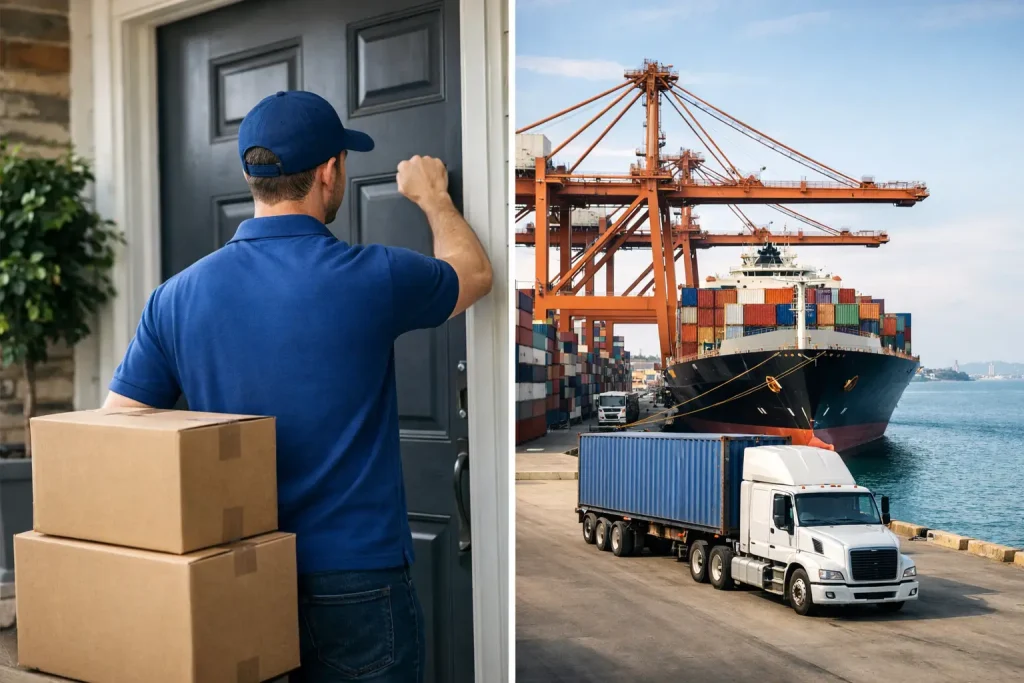
When you are planning an international move, the real decision often is not just air freight versus ocean freight. It is door to door vs port to port shipping, and that choice affects cost, handoff points, customs coordination, timing, and how much work lands on your side.
For expats, families, and corporate teams moving in or out of Singapore, this is where a shipment can either stay controlled or become fragmented. The right model depends on what you are shipping, where it is going, and whether you want one accountable partner managing the move from collection through final delivery.
What door to door vs port to port shipping actually means
Door-to-door shipping means your shipment is collected from your home, office, or origin address and delivered to the final destination address. In a relocation context, that usually includes pickup, packing, loading, export handling, international freight, customs coordination, destination handling, and delivery.
Port-to-port shipping is narrower. Your goods move from the port of origin to the port of destination. You, or a local agent you arrange separately, are generally responsible for getting the shipment to the departure port and clearing, collecting, and transporting it after arrival.
That difference sounds simple, but in practice it changes who manages risk, who handles documents, and who steps in when schedules shift.
Why this choice matters more in international moving
In commercial freight, port-to-port can make sense for experienced importers with their own brokers, warehouse teams, and transport partners. In household relocation, the stakes are different. You are not just moving cargo. You are moving furniture, personal effects, fragile items, work equipment, and often a tight relocation timeline tied to a visa, school term, or job start date.
A port-to-port booking may look cheaper on the first quote. But if you still need export packing, terminal handling, customs clearance, destination unloading, and final-mile delivery, the full cost can climb quickly. More importantly, each extra handoff creates another point where delays, extra charges, or miscommunication can surface.
That is why door-to-door service is often the stronger fit for private international moves. It keeps planning centralized and reduces the number of parties involved.
Door to door shipping: best for control and convenience
Door-to-door is built for customers who want predictability. One provider manages the move across stages that are easy to underestimate when viewed separately. That includes access planning at origin, professional export packing, container loading or freight preparation, shipping coordination, customs paperwork, port handling, destination delivery, and in many cases unpacking or debris removal.
For families relocating internationally, this model removes the pressure of finding a trucking company at destination, arranging customs support in a new country, or trying to coordinate delivery while still securing housing. For corporate mobility teams, it also creates a clearer chain of accountability. There is less ambiguity about who is responsible for status updates, documentation checks, and resolving exceptions.
This is also the better option when you are shipping high-value household goods, fragile items, or a full home move. The packing standard, inventory control, and handover process are more consistent when one relocation partner oversees the move from the start.
The trade-off is cost. Door-to-door service usually costs more upfront because it includes more labor, more coordination, and more responsibility. But for many customers, that higher price buys fewer surprises and far less time spent managing the shipment themselves.
Port to port shipping: best for selective use cases
Port-to-port shipping is not the wrong option. It is simply better suited to narrower scenarios.
If you already have a trusted destination agent, if your receiving party can handle port collection, or if you are moving goods into a market where you have established local logistics support, port-to-port can reduce the initial transportation cost. Some experienced international movers choose it when shipping a limited volume, consolidating cargo, or taking control of the final delivery on their own terms.
It may also appeal to customers relocating into temporary housing, where they prefer to hold goods near the port or arrange delivery later. In those cases, a port-to-port structure can offer flexibility.
But that flexibility comes with responsibility. You must be ready to manage customs release, destination fees, local transport, and timing at the arrival port. If documents are incomplete or collection is delayed, storage and demurrage costs can build fast. That is where a lower quote can stop looking like a savings.
Cost comparison: look past the base freight rate
The most common mistake in door to door vs port to port shipping comparisons is looking only at the ocean freight or air freight line.
Port-to-port often appears cheaper because it excludes major service elements. Once you add export pickup, packing materials, loading labor, customs support, terminal handling, destination documentation, local trucking, unloading, and possible storage, the final number may narrow considerably.
Door-to-door pricing is more inclusive. That makes it easier to budget accurately, especially for households and companies that do not want fragmented invoices from multiple vendors.
The better question is not which model has the lower starting price. It is which model gives you the better landed cost with fewer exposure points. For many international relocations, especially first-time moves, door-to-door wins on total value even when the initial quote is higher.
Customs and compliance: where port-to-port gets harder
Customs is where many shipments become stressful.
With door-to-door service, the move is usually structured around document checks and customs requirements from the beginning. A relocation-focused provider can flag country-specific rules, restricted items, inventory standards, and timing requirements before the shipment leaves origin.
With port-to-port, customers sometimes assume customs is a simple arrival formality. It is not. Requirements vary by country and by shipment type. Household goods, used personal effects, diplomatic shipments, and corporate relocations can all be treated differently. If you are handling the destination side yourself, you need to know what documents are required, when they must be submitted, and who is authorized to present them.
This is one reason end-to-end service matters. A strong relocation partner does not just move cargo. They organize the move around compliance so the shipment is less likely to stall at arrival.
Which option is right for your move?
If you are moving an entire household, relocating with children, managing a corporate assignment, or working to a fixed arrival date, door-to-door is usually the safer and more efficient choice. It reduces oversight, simplifies communication, and puts responsibility with one provider.
If you are an experienced shipper, moving a smaller volume, or have reliable support on both sides of the shipment, port-to-port can work well. It can also make sense if you want tighter control over destination delivery arrangements and are comfortable handling local coordination.
The decision comes down to how much of the move you want to manage yourself. International shipping is rarely just about transit. It is about the handoffs before and after transit, where costs and delays tend to appear.
A practical way to decide
Ask three questions before you book. First, who is handling packing, customs paperwork, and delivery at destination? Second, what charges are excluded from the quote? Third, if there is a delay at port, who takes action and who pays the resulting local fees?
If those answers are spread across multiple vendors and too many assumptions, door-to-door is likely the better structure. If the responsibilities are already covered within your own network, port-to-port may be enough.
For international movers serving Singapore and major expat corridors, the strongest service model is usually the one that protects your timeline, your goods, and your attention. That is why many customers choose a single accountable partner such as Astro Movers rather than trying to coordinate separate freight, customs, and delivery providers on their own.
When your shipment is tied to a real relocation date, simplicity is not a luxury. It is part of getting the move right the first time.
