
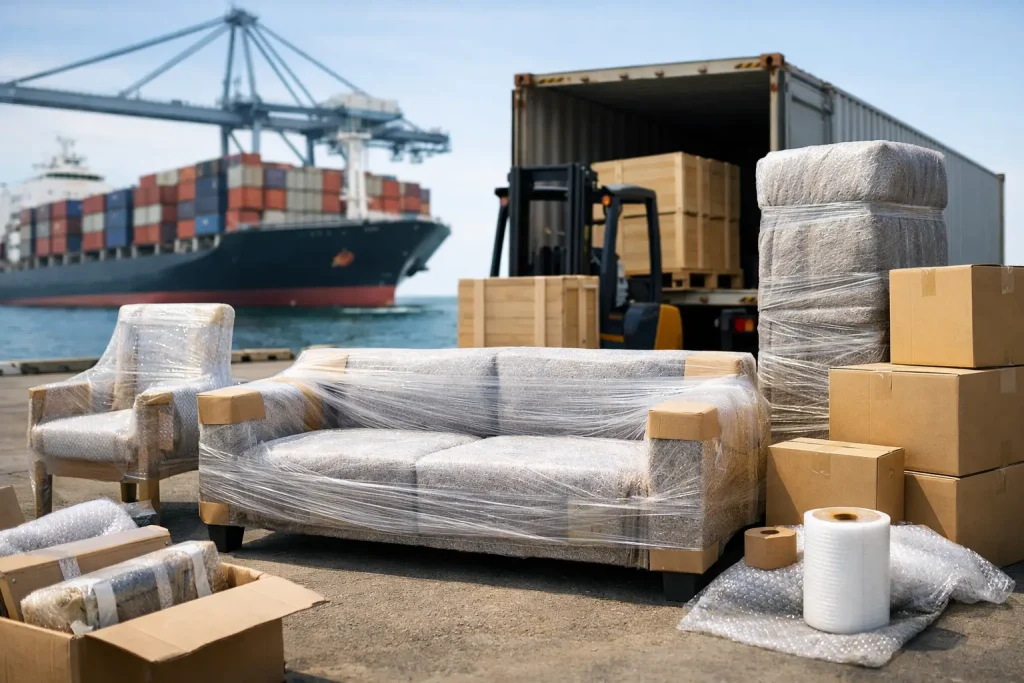
Salt air, container movement, port handling, and long transit times are not forgiving. If furniture is packed like it is going into local storage or a short truck move, damage becomes much more likely. That is why knowing how to prepare furniture for sea shipment matters before a single item is wrapped, boxed, or loaded.
Sea freight is efficient for international moves, but it puts furniture through a very different chain of handling. Items may be lifted multiple times, stacked near other cargo, exposed to humidity, and left in transit for weeks. The right preparation is less about making furniture look neat and more about protecting structure, surfaces, and fit-for-delivery condition when it reaches your destination.
Why sea shipment needs a different packing standard
Furniture traveling by ocean freight faces pressure from three directions at once – movement, moisture, and time. Even inside a sealed container, cargo can shift. A chair leg that survives a van ride across town can crack after repeated vibration at sea. Veneer and wood finishes can react to trapped moisture. Upholstered pieces can absorb odor or humidity if they are wrapped incorrectly.
This is where many first-time international movers underestimate the process. Good-looking packing is not always shipping-grade packing. Thick blankets alone are rarely enough for export moves. Protection has to match the furniture material, shipment size, and whether the load will move in a shared container or a dedicated container.
How to prepare furniture for sea shipment step by step
The first step is deciding what should actually be shipped. Sea freight is cost-effective for full household moves and larger volumes, but not every piece earns its place in the container. Flat-pack replacements, low-value items, or furniture that does not suit the destination home may cost more to ship than to replace. For high-quality pieces, family furniture, or office assets that need continuity, proper export packing makes sense.
Once the shipment list is confirmed, inspect every item closely. Existing scratches, dents, loose joints, glass chips, or fabric marks should be documented before packing starts. This protects you in two ways. First, it helps determine what needs reinforcement. Second, it creates a condition record for insurance and delivery checks.
Then clean and dry each piece thoroughly. Dust, oils, and trapped moisture can create problems during long ocean transit. Wood furniture should be wiped down and allowed to dry fully before wrapping. Upholstered items should be vacuumed and checked for dampness. Furniture should never be wrapped while even slightly wet, because sealed moisture can lead to mildew, odor, and finish damage by the time the container arrives.
Disassemble what should be disassembled
Not every item needs to come apart, but many should. Bed frames, dining tables with removable legs, shelving units, desks, and modular furniture are usually safer to ship in sections. Disassembly reduces stress on joints, lowers the chance of snap damage, and makes protective packing more secure.
Hardware needs its own control process. Screws, bolts, washers, and brackets should be bagged, labeled, and attached to the corresponding item or packed in a clearly marked parts box. Losing a small hardware bag can turn final delivery into a frustrating delay. For office relocations and larger household moves, labeling discipline saves time at destination.
Protect surfaces before adding outer wrap
One of the most common mistakes is applying plastic wrap directly onto polished wood, leather, or delicate finishes. During long transit, direct contact can trap condensation or mark the surface. Furniture should first be protected with a breathable layer or appropriate non-abrasive wrapping material, then reinforced with outer layers based on the item type.
Wood corners, carved edges, and protruding legs need extra buffering. Glass components should be removed where possible, edge-protected, and packed separately in reinforced cartons or custom wooden crating. Marble tops and stone surfaces need rigid protection and usually deserve custom crating, because weight and brittleness make them vulnerable during lifting and container loading.
For upholstered furniture, the goal is protection without trapping unnecessary moisture. Sofas, headboards, and dining chairs with fabric surfaces need clean wrapping materials and padding on pressure points. Leather requires special care because over-sealing can affect the finish in humid conditions. This is one of those situations where material-specific packing standards matter more than generic moving supplies.
Choosing the right packing level for ocean freight
There is no single answer for every shipment. A few household items moving in a shared container need a different approach than a full container load for a large family relocation. The more transfer points involved, the more protective the packing should be.
Standard export wrapping may be suitable for sturdy furniture with simple shapes. Fragile, high-value, oversized, antique, or designer pieces often require custom crating. Crating costs more upfront, but it can be the right decision when replacing or restoring the item would be far more expensive. The trade-off is straightforward – lower packing cost now can mean higher damage risk later.
Cartons also matter. Lampshades, removable shelves, cushions, and smaller furniture components should not be tucked loosely around the container. They need correctly sized export cartons with internal cushioning and clear labels. Sea shipments reward discipline. Loose packing creates preventable damage.
Container loading matters as much as packing
Even well-packed furniture can suffer if the container is loaded badly. Weight distribution, stacking logic, and internal securing methods all affect the outcome. Heavy items should anchor the load, while fragile and finished surfaces need isolation from compression points and rough edges.
Furniture should never be packed tightly just to fill every gap. Controlled spacing, protective layering, and lashing are what reduce movement. Inside a container, cargo can shift from vessel motion, port crane handling, and inland transport at origin and destination. If a wardrobe or table is allowed to move even slightly over a long transit, friction and repeated impact can do real damage.
This is also why mixed-load shipments need experienced planning. In shared containers, your items may travel alongside other consignments. Professional loading standards become critical because protection is not only about your furniture itself, but about how your shipment is separated and stabilized within the container environment.
Labeling and inventory control are part of preparation
If you want faster customs handling, smoother unpacking, and fewer destination surprises, inventory control starts before shipment leaves your home or office. Every item or carton should be labeled clearly and consistently. Room-based labeling helps at delivery, but export shipments also need a documented inventory that aligns with packing records.
A proper inventory is practical, not bureaucratic. It helps identify what has been packed, what was disassembled, where hardware is stored, and which items require inspection first on arrival. For corporate relocations and time-sensitive family moves, this level of control reduces confusion after a long international transit.
Don’t overlook customs and material restrictions
Knowing how to prepare furniture for sea shipment also means preparing it for border compliance. Some destinations have specific rules for wooden items, used household goods, plant-based materials, or personal effects documentation. Dirty outdoor furniture, untreated wood, or undeclared contents can create customs problems that have nothing to do with the physical packing quality.
This is where a logistics-led mover adds value. Sea shipment is not just about wrapping furniture well. It is about matching packing, documentation, scheduling, and customs requirements into one managed process. For international movers handling expat and corporate relocations, that coordination prevents delays that can be more disruptive than minor transit issues.
Common mistakes that increase damage risk
The biggest mistakes are usually simple. Packing dirty or damp furniture, failing to disassemble vulnerable items, wrapping delicate surfaces in the wrong material, and using low-grade cartons are common problems. Another frequent issue is underestimating humidity. Furniture can arrive with mold, odor, or finish marks not because the container leaked, but because moisture was trapped during packing.
There is also a cost mistake many shippers make. They spend heavily on freight but cut corners on export packing. That is backwards. Freight moves the shipment, but packing protects the value inside it. If the furniture matters enough to ship internationally, it matters enough to prepare correctly.
When professional packing is the smarter choice
Some customers can handle a few basic items themselves. But for full household relocations, higher-value furniture, or any shipment with customs complexity, professional export packing is usually the safer route. The benefit is not just labor savings. It is the use of tested materials, material-specific wrapping methods, accurate inventory handling, and loading plans built for international transit rather than domestic moving.
For customers relocating from Singapore to major expat destinations, this is exactly where an experienced international mover earns trust. A provider like Astro Movers does more than move boxes. The right partner coordinates consultation, packing, container loading, documentation, customs, and final delivery with one accountable process.
Furniture that arrives in good condition rarely got there by luck. It got there because somebody treated sea shipment like the specialized logistics job it is. If your move is coming up, give each piece the level of preparation the journey actually demands.
