
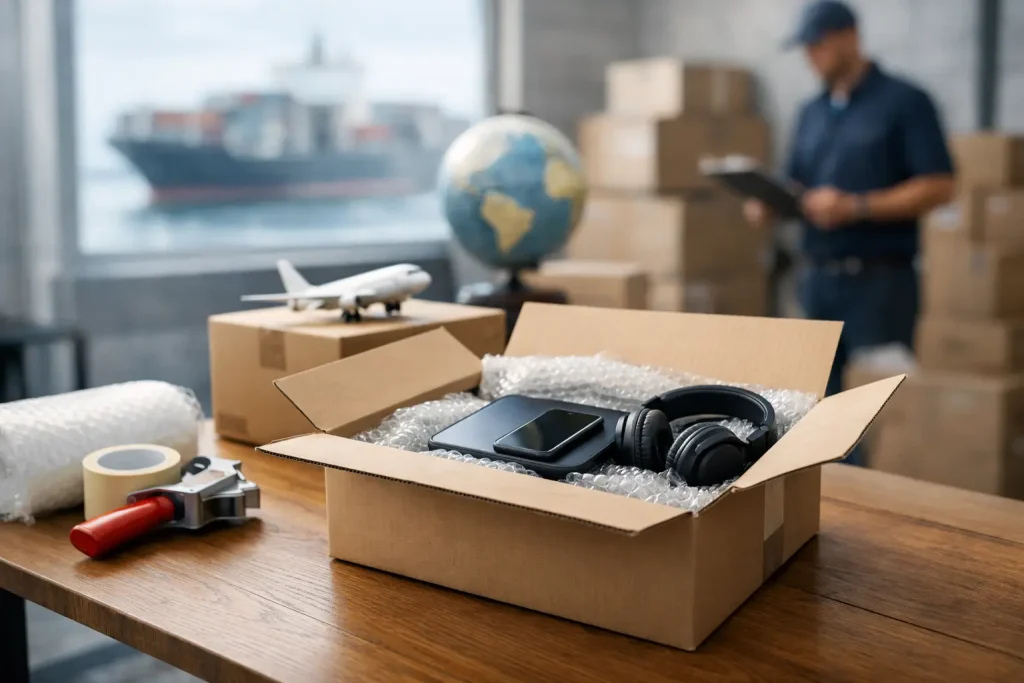
A laptop that arrives with a cracked screen, a smart TV that powers on with internal damage, or a server component held at customs can turn a planned relocation into an expensive delay. If you are figuring out how to ship electronics overseas safely, the real job is not just boxing items up. It is protecting sensitive equipment against impact, moisture, static, transit delays, and documentation issues at the same time.
For expats, families, and corporate relocation teams, electronics are often some of the most valuable and disruption-sensitive items in a shipment. They support work, school, communication, and day-to-day life from the moment you arrive. That is why shipping electronics internationally requires a more controlled process than standard household goods.
Why electronics need special handling
Electronics fail in ways furniture does not. A chair can survive a rough corner impact and still function. A desktop monitor, gaming console, medical device, or office workstation may look fine on the outside while sustaining internal damage from shock, vibration, pressure, or humidity.
Battery-powered devices add another layer of complexity. Many electronics now contain lithium-ion batteries, and those items are subject to carrier rules, route restrictions, and packaging requirements. Some products can move by air only under specific conditions. Others may be limited, declared separately, or excluded depending on battery size, quantity, and whether the battery is installed in the device.
Then there is customs. In many destinations, used electronics are allowed, but they may need clear item descriptions, declared values, serial numbers, proof of ownership, or additional review. If the paperwork is vague, delays become much more likely.
How to ship electronics overseas safely without avoidable damage
The safest shipments start with item-by-item planning. Before choosing boxes or freight mode, separate your electronics into categories. Identify high-value items, fragile screen-based devices, battery-powered equipment, work-critical devices, and anything that would be difficult or expensive to replace abroad.
This matters because not every device should be shipped the same way. A used printer and a professional camera kit should not receive the same packing standard. A family relocation may justify ocean freight for non-urgent devices, while a corporate move may require air freight for essential equipment needed immediately after arrival. Safe shipping depends on matching the protection level and transit method to the actual item.
Original manufacturer packaging is usually the best option when you still have it. Those boxes were designed for the item’s dimensions, screen spacing, and accessory placement. If the original box is not available, use a double-box method with anti-static protection, cushioning material, and a strong outer carton rated for export handling.
Wrap sensitive electronics in anti-static bags where appropriate, especially for components such as graphics cards, motherboards, hard drives, and networking hardware. After that, use firm cushioning that prevents movement inside the box. Empty space is the enemy. If an item shifts during transit, impact forces increase quickly.
Screens need special care. Televisions, monitors, and glass-fronted devices should be protected with foam sheets or screen protectors, then packed upright when possible, not laid flat under pressure from other cargo. Large TVs are one of the most commonly damaged electronics in international moves because they are packed like general household items instead of fragile display equipment.
Prepare devices before packing
Safe shipping starts before the first layer of wrap goes on. Back up all data from laptops, desktops, tablets, phones, and external drives. Damage is one risk. Loss, customs inspection, or unexpected delay is another. If the information matters, assume you need a backup before shipping.
Remove detachable accessories and pack them separately. Power cords, remotes, routers, cables, adapters, stands, and mounts can scratch or pressure-damage the main unit if left loose in the same carton. Label each accessory clearly so reinstallation is straightforward at destination.
Take photos of each device before packing, including model labels and visible condition. For high-value items, record serial numbers. This helps with inventory control, customs declarations, and any insurance claim if one is needed.
If a device uses removable batteries and regulations allow, it may be safer to separate them depending on the shipment type and destination requirements. That said, battery handling rules vary by carrier and country. This is one area where professional review matters because a mistake can lead to shipment rejection, delay, or extra inspection.
Choose the right shipping mode for the electronics you are moving
When customers ask how to ship electronics overseas safely, they often focus on packaging first and transit mode second. In practice, both decisions are linked.
Air freight is faster and can reduce the total time electronics spend in the logistics chain. That shorter transit window can lower exposure to humidity, repeated handling, and storage conditions. It is often the stronger option for urgent, high-value, or business-critical electronics. The trade-off is cost, and battery restrictions may narrow what can be sent.
Ocean freight is often more cost-effective for full relocations or larger household shipments, especially when electronics are moving alongside furniture and personal effects. It works well for properly packed non-urgent items, but transit times are longer and moisture protection becomes more important. Electronics shipped by sea should be packed with humidity control in mind, particularly for routes involving tropical climates or longer port dwell times.
For some moves, a split-shipment strategy makes the most sense. Keep essential electronics with you or ship them by air, and send less urgent devices by ocean freight. That approach is often ideal for relocating families and corporate assignees who need immediate access to work equipment, chargers, and communication devices on arrival.
Customs, declarations, and compliance matter more than most people expect
A safely packed box can still become a problem if the documents are weak. Electronics should be described accurately on the packing list and customs paperwork. “Used household items” is too broad when the shipment contains laptops, sound systems, monitors, or office equipment.
Descriptions should be specific, values should be realistic, and quantities should match the packed inventory. Some countries also pay closer attention to new-in-box electronics because they may trigger duties, taxes, or commercial import questions. If you are carrying multiple matching devices for office use, the shipment may be assessed differently than a standard household relocation.
This is where an experienced international mover adds real value. Proper customs coordination reduces avoidable holds, inspection risk, and last-minute requests for missing detail. For customers moving across borders with mixed household goods and electronics, a structured documentation process is not optional. It is part of protecting the shipment.
Insurance is part of safe shipping
Packing quality reduces risk. It does not remove it. International shipping involves multiple handling points, transport legs, and storage transitions. If you are sending expensive electronics overseas, insurance should be part of the plan from the start.
The key is to understand what is actually covered. Some policies have limits for owner-packed cartons. Others require professional packing for fragile or high-value electronics. Some cover total loss more clearly than partial internal damage. That distinction matters because electronics often suffer functional issues without obvious external carton damage.
Declared value also matters. Under-declaring to save on cost may leave you exposed if replacement prices are much higher at destination. For work devices, specialty equipment, or home office setups, accurate valuation is a smarter move than guessing low.
When professional packing is the better decision
You can pack small personal electronics yourself if you understand the risks and follow carrier rules carefully. But for larger, fragile, expensive, or multi-item shipments, professional export packing is usually the safer route.
That is especially true for TVs, desktop setups, studio gear, medical electronics, office equipment, and mixed relocations where electronics are being loaded with furniture and cartons in the same shipment. Professional teams know how to stabilize irregular items, build proper cushioning, apply export-grade materials, and prepare inventories that support customs clearance.
For international relocations, the real benefit is accountability. A single provider managing packing, freight coordination, customs handling, and delivery creates a more controlled chain of responsibility. That is one reason customers working with a trusted name like Astro Movers often avoid the handoff problems that happen when packing, shipping, and customs are split across multiple vendors.
Common mistakes that lead to damaged or delayed electronics
Most electronics claims come from preventable decisions. Weak cartons, poor internal cushioning, unlabeled accessories, undeclared batteries, vague customs descriptions, and no moisture protection are all common issues. Another frequent mistake is shipping irreplaceable work devices in the main household shipment instead of keeping them available for immediate use.
There is also a false economy in treating all electronics as standard boxes. The cheaper approach at origin can become the more expensive outcome after damage, replacement purchases, or delays at destination.
The safest approach is simple even if the execution is detailed: identify what matters most, match each item to the right packing standard, choose the right freight mode, and document everything properly. That is how overseas shipping becomes controlled instead of risky.
If your move includes electronics you cannot afford to lose, damage, or have delayed, treat them as a specialized part of the relocation, not an afterthought. A careful plan at origin is what protects your setup when the shipment reaches the other side of the world.
