
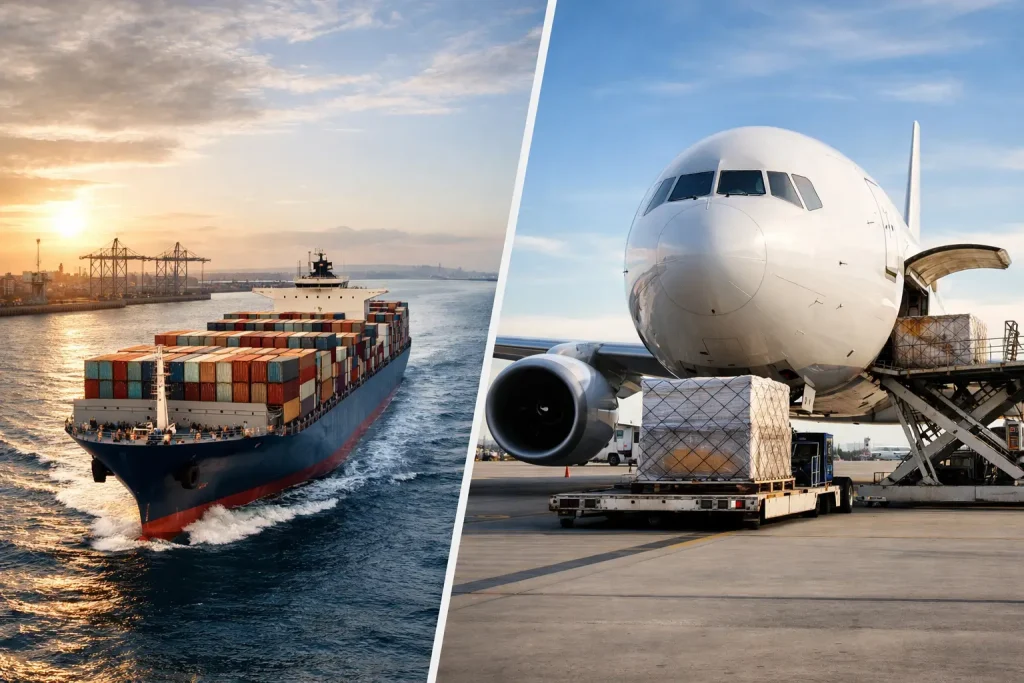
A relocation timeline can change with one decision: sea freight or air freight moving. If you are leaving Singapore for a new job, moving your family overseas, or coordinating a corporate transfer, the shipping mode you choose will shape your budget, delivery window, packing strategy, and customs process. There is no one-size-fits-all answer. The right choice depends on what you are moving, how fast you need it, and how much risk you want to carry in the planning.
For international movers, this is where experience matters. Freight is not just about getting items from one port or airport to another. It is about matching the shipment method to the realities of your move, then managing packing, documentation, customs clearance, and final delivery without gaps. That is what keeps a move on schedule and prevents small mistakes from becoming expensive delays.
Sea freight or air freight moving: what changes in practice?
The difference between sea and air shipping is not only speed. It affects the entire move design.
Sea freight is typically the better fit for full household relocations, larger shipments, furniture, and moves where cost efficiency matters more than immediate delivery. It gives you the capacity to move more at a lower rate per cubic foot. For families relocating long term, that often makes it the practical choice. If you are shipping a full home, office equipment, or bulky personal effects, containerized ocean freight usually gives you the most room to plan properly.
Air freight is built for urgency. It is faster, more limited in volume, and significantly more expensive per kilogram or cubic foot. That does not make it a premium option for every move. It makes it the right tool for time-sensitive shipments. If you need work essentials, personal documents, baby items, or a small set of priority household goods to arrive quickly, air freight can reduce disruption while the rest of the move follows separately.
This is why many international relocations are not strictly sea or air. They are a combination. A well-managed move often uses air freight for immediate essentials and sea freight for the main household shipment.
When sea freight moving makes more sense
Sea freight is usually the stronger option when volume is high and deadlines are manageable. If you are moving a two-bedroom or three-bedroom home, sending furniture, or relocating with children, ocean freight gives you the space and cost structure needed for a complete move.
It also offers flexibility in shipment types. A full container load works well when you have enough goods to justify exclusive container space. Less than container load can be appropriate for partial moves or smaller household shipments where you do not need a full container. The right choice depends on shipment size, destination routing, and how tightly you need to control handling points.
The trade-off is time. Sea freight takes longer, and transit estimates can shift due to vessel schedules, port congestion, customs holds, or destination delivery conditions. For customers who can plan ahead, that is usually acceptable. For customers who need immediate access to their belongings, it can be frustrating unless the move is structured carefully.
Sea freight also rewards disciplined packing and inventory management. Longer transit and more handling stages make professional export packing essential. Cartons, wooden crates for fragile items, moisture protection, and accurate labeling all matter more than many first-time movers expect.
When air freight moving is the better decision
Air freight is ideal when timing has real consequences. Professionals starting a new role, families arriving before their sea shipment, students heading into term, and corporate transferees with fixed reporting dates often need part of their move delivered fast.
The most common mistake is assuming air freight should cover more than it needs to. Because it costs more, every item should justify the speed. Clothing for the first few weeks, laptops, children’s essentials, immediate kitchen basics, and critical personal effects are sensible air freight items. Dining tables, low-priority decor, and bulky furniture are not.
Air freight can also be useful when destination housing is temporary. If you are moving into serviced accommodation first and a permanent residence later, shipping a smaller, high-priority set by air may be smarter than rushing a full household shipment into a short-term setup.
The operational advantage is speed, but speed still depends on documentation accuracy, customs readiness, and destination coordination. Fast transport does not solve paperwork issues. It only shortens the travel portion of the shipment.
Cost is important, but not in the way most people think
Most customers begin with price, which is reasonable. But the cheapest shipping method is not always the lowest-cost move.
Sea freight generally has lower transportation cost for larger shipments. That is the headline advantage. But if you choose sea freight for everything and then spend heavily replacing basic items while waiting, paying temporary storage, or adjusting around delayed essentials, the savings can shrink.
Air freight has a higher upfront rate, yet it can be cost-effective for a tightly selected shipment that keeps your relocation functioning from day one. The question is not whether air is expensive. It is whether selective air freight saves money and stress elsewhere.
A reliable moving partner will not push one mode across every situation. They will assess shipment volume, destination lead time, customs conditions, housing arrangements, and your personal timeline, then build the move around that reality.
Sea freight or air freight moving for families and corporate relocations
Families usually benefit from a split strategy. Large household goods, furniture, and non-urgent personal effects move by sea. School materials, comfort items for children, immediate clothing, and daily-use necessities can go by air. That approach balances cost control with practical living needs during the first weeks abroad.
Corporate relocations often require tighter scheduling and more accountability. Employees may need to report by a fixed date, and HR or mobility teams need predictable status updates. In those cases, air freight can support business continuity while sea freight handles the core household volume. The move plan has to align with reporting dates, lease start dates, and destination services.
For office moves or commercial relocation elements, the equation can shift again. Urgent files, IT equipment, and operational essentials may need air freight, while furniture and non-critical inventory move by sea. The shipping method should support business function, not just transit cost.
Customs, packing, and documentation decide more than shipping mode
Customers often compare sea and air as if transit is the whole story. It is not. The shipment only moves smoothly when the supporting work is done correctly.
Customs requirements vary by country and can affect both sea and air freight. Inventory lists, passport copies, visa or permit documentation, powers of attorney, and declarations may all be required depending on the destination. Errors in paperwork can delay either method.
Packing also changes by shipment type. Air freight packing must balance protection with weight efficiency. Sea freight packing must account for longer transit, stacking pressure, and environmental exposure. A provider with both moving and freight expertise can plan these details as one coordinated process instead of treating shipping as a separate handoff.
That is where a structured relocation partner stands apart. Astro Movers supports international customers with planning, professional packing, freight coordination, customs management, and delivery under one accountable service model. For customers moving across borders, that single-point responsibility matters.
How to decide between sea freight and air freight moving
Start with three practical questions. First, what do you need in the first two weeks after arrival? Second, what is too expensive or too inconvenient to replace temporarily? Third, how much of your shipment actually justifies priority treatment?
If most of your goods can wait and your shipment is substantial, sea freight is usually the stronger option. If your move date is close, your shipment is small, or immediate access matters, air freight may be the better fit. If the answer is somewhere in the middle, a dual-mode shipment is often the smartest and most cost-controlled approach.
The real objective is not choosing the faster method or the cheaper method in isolation. It is building a move plan that protects your budget, keeps your arrival manageable, and reduces the chance of disruption.
The best international moves are not improvised. They are designed around transit time, customs compliance, shipment priority, and final delivery realities. If you are deciding between sea and air, think beyond the freight lane itself. Choose the option that supports how you actually need to live and operate when you arrive.
