
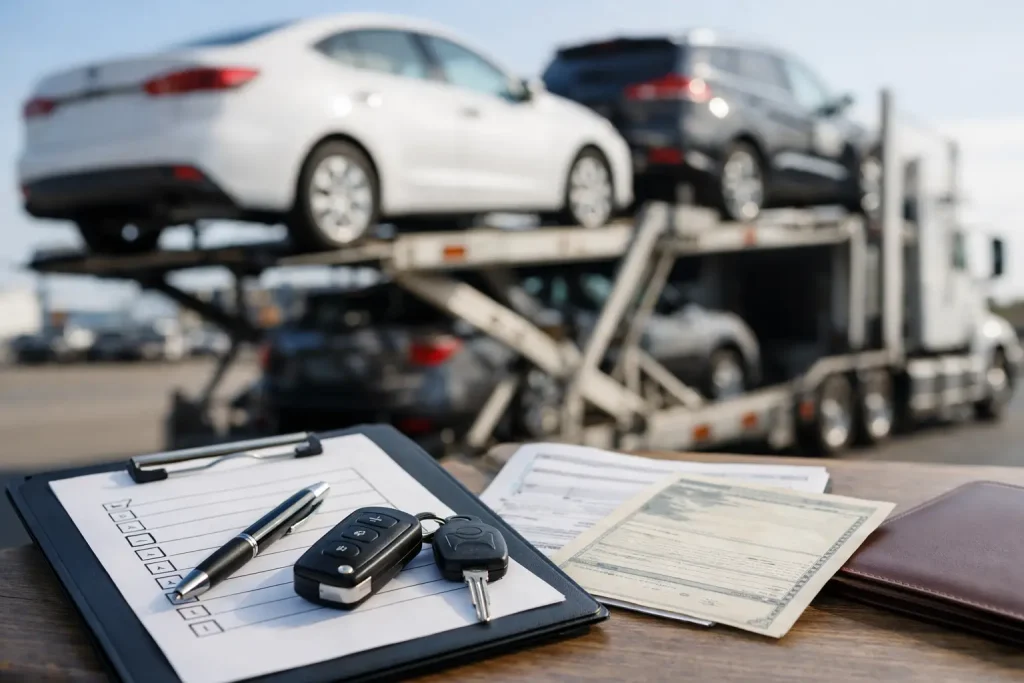
One missing signature can hold a vehicle at port longer than the ocean transit itself. That is why a solid car shipping documentation checklist matters so much. If you are moving a vehicle internationally, the paperwork is not a side task. It is what allows your shipment to clear export controls, pass customs review, and move toward delivery without avoidable delays.
For expats, families, and corporate relocation teams, vehicle shipping usually sits inside a bigger moving timeline. Flights are booked, housing is arranged, household goods are scheduled, and the car often becomes one more critical piece that has to arrive legally and on time. The problem is that car shipping documents vary by country, by port, by vehicle status, and sometimes by the shipping method itself. A practical checklist keeps the process controlled.
What a car shipping documentation checklist should cover
At minimum, your car shipping documentation checklist should confirm three things. First, you have the legal right to export and ship the vehicle. Second, the receiving country allows that vehicle to enter. Third, the shipping line, customs authorities, and destination agents all have the paperwork they need in the format they require.
This is where many people get caught out. They assume that having a car title and passport is enough. In some cases, it is close. In many others, it is not. Lienholder releases, purchase invoices, import permits, emissions compliance records, and power of attorney documents may all come into play depending on the destination and ownership status.
A reliable mover will flag these early, because documentation problems are easier to fix before the vehicle reaches port than after it is already in a customs hold.
Core documents most international car shipments require
The exact file set depends on origin and destination, but most international vehicle moves start with the same foundation.
Proof of ownership
You will usually need the original vehicle title or another accepted ownership document. If the car is financed, that adds a layer of complexity. Many lenders will not allow export without written approval, and some will require the loan to be settled first. If there is an active lien, get clarity before booking shipment, not after loading.
If the car is recently purchased, customs may also request a bill of sale or commercial invoice to establish value and ownership history. This matters for duties, taxes, and import eligibility.
Government-issued identification
A valid passport is commonly required, especially when the car is moving as part of an international relocation. Some destinations also ask for a visa, residence permit, work pass, or other immigration document that proves the consignee has the right to import personal effects and vehicles.
Names across documents need to match. Small differences, such as a middle name appearing in one file but not another, can trigger questions that slow approval.
Vehicle registration
Current vehicle registration helps verify that the car is legally recorded and tied to the owner. Some countries want both current and prior registration history, especially for used imports. If registration has lapsed, that does not always stop shipment, but it can create extra review at export or destination customs.
Export declaration or customs filing
Many countries require formal export filing before a vehicle can leave. In the US, for example, export rules can involve advance title submission and customs review before loading. Other countries have their own export declaration systems, timing rules, and document inspection procedures.
This is one of the areas where process discipline matters most. Missing a filing deadline can mean your container or vessel booking is missed, even if every other part of the move is ready.
Bill of lading or shipping instruction details
Once your shipment is booked, carrier paperwork becomes part of the document chain. The bill of lading reflects the shipping details, consignee information, port routing, and shipment terms. Errors here can create downstream clearance issues, particularly if the vehicle description or owner details do not line up with customs paperwork.
Destination-specific documents that often cause delays
The biggest documentation mistakes usually happen when shippers prepare only for export and forget that import clearance has its own rules.
Import permit or vehicle approval
Some countries require pre-approval before the vehicle even departs. That may take the form of an import permit, roadworthiness pre-clearance, or a conformity review tied to local transport regulations. Without it, the car may arrive but remain uncleared.
This is especially relevant in markets with strict controls on vehicle age, engine type, right-hand or left-hand drive, emissions standards, or safety specifications. Whether the car can physically be shipped is not the same question as whether it can legally be imported.
Emissions and compliance records
A destination country may ask for proof that the vehicle meets local emissions or safety standards. In some cases, manufacturer letters, homologation records, or modification approvals are needed. In others, the vehicle can enter but must undergo inspection or conversion before registration.
That trade-off matters. A car may be shippable, yet expensive to legalize after arrival. Documentation should be reviewed in the context of total relocation cost, not just freight cost.
Insurance documents
Marine insurance is separate from local driving insurance, and some customers confuse the two. For shipping, you may need cargo insurance paperwork or valuation support. At destination, local authorities may require proof of insurance before registration or release.
If the vehicle is high value, modified, or part of a household move with combined services, make sure declared value documents are consistent across all shipment files.
Supporting paperwork people forget
Some of the most common delays come from documents that seem minor until someone asks for them.
A power of attorney may be needed if an agent is clearing the car on your behalf. A copy of keys may be requested by some handlers, especially for roll-on/roll-off shipping. If the vehicle is being shipped under a company relocation program, a corporate authorization letter or assignment letter may also be required.
If the car was inherited, gifted, or transferred between family members, customs may ask for supporting declarations to explain ownership transition. If you changed your name, legal proof connecting your identity documents to the ownership documents may be necessary.
None of this is unusual. It simply means document review should account for the real ownership story, not just the ideal paperwork stack.
Why document accuracy matters as much as document presence
Having the document is only half the job. The details must align.
Vehicle identification number, engine number if applicable, owner name, address, passport details, and vehicle description should be consistent across title, registration, shipping instruction, and customs filings. A transposed digit in the VIN can stop release. So can an outdated address if the destination authority cross-checks against your immigration or relocation file.
Scans also matter. Blurry copies, cropped edges, expired IDs, and unsigned forms are common reasons for rejection. For international shipments, customs teams often work from scanned files before originals are reviewed, so document quality affects speed.
How to organize your checklist before booking shipment
The strongest approach is to build your file in stages. Start with ownership, ID, and vehicle details. Then confirm export requirements at origin. Then confirm import requirements at destination. Only after that should you finalize booking assumptions around transit time and release timing.
This order matters because shipping dates are easy to reserve. Customs eligibility is what actually determines whether the move can proceed cleanly.
For families and professionals relocating on a fixed deadline, it is smart to prepare both digital and physical copies. Keep one complete PDF file, one folder of originals, and one shared set available to your move coordinator. That reduces last-minute chasing when customs asks for a repeat submission.
Working with a relocation partner versus managing it alone
Car shipping can be handled directly, but documentation is where self-managed shipments often become expensive. Port storage, demurrage, missed vessel cutoffs, and customs exams are not always caused by major mistakes. Sometimes they start with one overlooked document or one filing made too late.
That is why many international movers prefer a managed process. A structured provider can review document readiness before booking, align vehicle shipment with household goods timing, coordinate customs submissions, and keep one accountable line of communication open from origin to destination. For customers already managing visas, schools, housing, and work start dates, that control is valuable.
Astro Movers supports vehicle shipping as part of a broader international relocation plan, which is often the difference between a shipment that looks organized and one that actually moves on schedule.
A practical final check before your car leaves
Before handover, confirm that ownership documents are valid, names match exactly, export filings are complete, destination approvals are in place, and all scans are clear and current. Then verify something just as important – that the vehicle itself matches the paperwork, including VIN, declared condition, and any stated accessories or modifications.
Good documentation does more than satisfy customs. It protects your timeline, your budget, and your control over the move. When the paperwork is right from the start, the shipment has a far better chance of arriving like it should – with fewer questions, fewer delays, and far less stress.
