
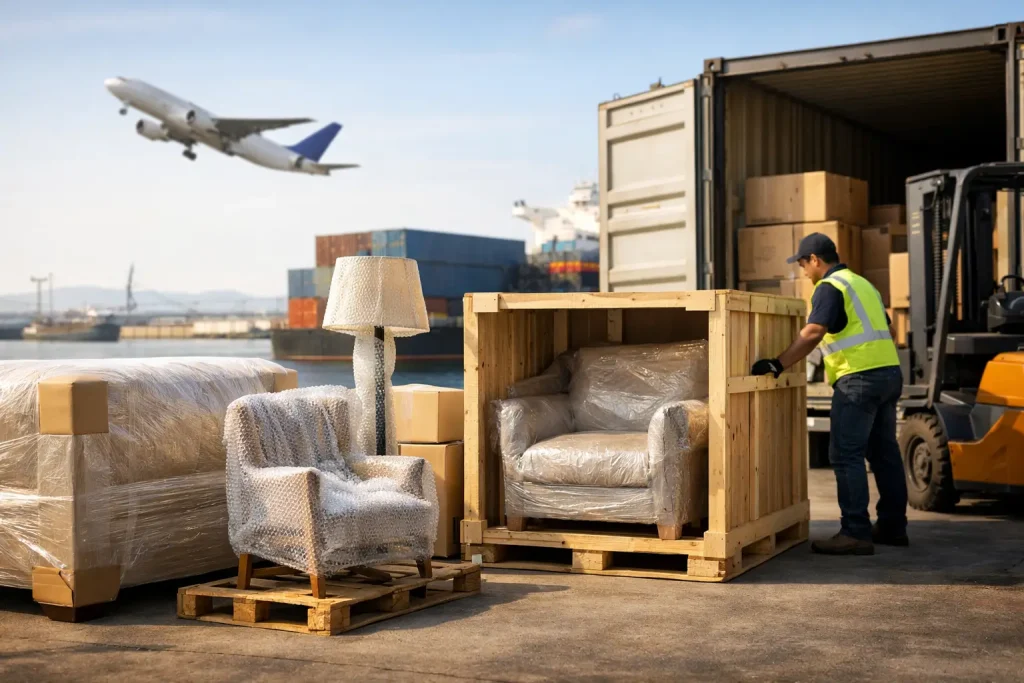
A solid wood dining table can survive an ocean journey. A marble-top console can arrive without a chip. Even a full household of furniture can cross borders in good condition. So, can you ship furniture overseas safely? Yes – but not by treating it like a standard parcel shipment.
Furniture moves safely when the planning is as strong as the packing. International shipping adds real pressure points: long transit times, multiple handling stages, customs inspections, climate exposure, and last-mile delivery challenges. The difference between a smooth arrival and a costly problem usually comes down to preparation, packing standards, freight choice, and clear ownership of the move.
Can You Ship Furniture Overseas Safely Without Damage?
You can, but safety is never just about putting cardboard around a chair and hoping for the best. Overseas furniture shipping is a controlled logistics process. Each item needs to be assessed for material, size, weight, fragility, and value before anyone decides how it should be packed, loaded, and moved.
Wood furniture may need protection from scratches, compression, and humidity shifts. Upholstered pieces need wrapping that protects fabric without trapping moisture. Glass panels, mirrors, and stone tops demand reinforced crating and careful load positioning. Flat-pack furniture can be easier to move, but some lower-cost pieces do not handle repeated loading and long-distance transport well.
This is why experienced international movers start with a survey. They identify what is worth shipping, what needs custom packing, and what may be better replaced at destination. That advice matters because the safest move is not always the cheapest option upfront, and the cheapest option is not always the safest.
What Makes Furniture Shipping Risky
International furniture shipping has more variables than a local move. Your items are not simply loaded once and unloaded once. They may move from residence to truck, truck to warehouse, warehouse to container, container to port, port to vessel, vessel to destination port, then through customs and onward to final delivery.
Every transfer creates a handling risk. Longer transit times also increase exposure to vibration, stacking pressure, and environmental changes. Furniture with delicate finishes can suffer surface damage if packed with the wrong materials. Poorly secured loads can shift inside a container. In some cases, customs examinations mean crates or wrapping are opened and reclosed, which makes professional labeling and repacking standards even more important.
There is also a planning risk that many customers underestimate. If dimensions are wrong, access at pickup or delivery is restricted, or destination rules are misunderstood, delays can follow. Delays often mean extra storage, additional handling, and more opportunities for damage.
The Packing Standard Decides a Lot
If you want furniture to arrive safely, start with professional export packing. Domestic moving methods are not enough for an international shipment.
Export packing should match the item, not just the shipment. Tables are often disassembled where possible, with legs wrapped separately and surfaces protected against abrasion. Sofas need layered wrapping that guards against dirt, tears, and compression. Antiques and designer pieces may need custom wooden crates. Loose hardware should be labeled and sealed so reassembly is straightforward at destination.
Good packing also includes internal load planning. It is not enough to protect each piece individually. The shipment must be stowed so weight is distributed correctly and fragile items are not exposed to pressure from heavier furniture. Professional loaders understand how container space, stacking limits, and movement in transit affect furniture safety.
This is where a structured mover adds value. A company that handles both moving execution and freight coordination can manage packing with the shipping route in mind, instead of treating packing and transport as separate jobs.
Choosing the Right Freight Method
The answer to can you ship furniture overseas safely also depends on how you ship it. Air freight, ocean freight, and shared container options each have trade-offs.
Ocean freight is the most common choice for furniture because it is more cost-effective for large or heavy household goods. A full container load gives you better control when you are moving a larger home or office because your shipment stays within dedicated container space. Less than container load can work well for partial moves or a few furniture items, but shared space introduces extra handling at consolidation and deconsolidation points.
Air freight is faster, but it is usually reserved for urgent, high-value, or limited-quantity items because of cost. For most furniture shipments, speed alone does not justify the expense unless timing is critical.
The best method depends on volume, budget, transit expectations, destination, and the type of furniture involved. A family relocating with a full household has different needs than a corporate client shipping executive housing furniture or an individual sending a few key pieces overseas.
Customs Can Affect Safety Too
Many people think of customs as a paperwork issue only. It is a shipment safety issue as well.
Incomplete documentation, inaccurate inventories, or country-specific import restrictions can lead to inspections, holds, and storage delays. Those delays may leave furniture sitting longer than planned in transit facilities or warehouses. The longer a shipment remains in the chain, the more important strong packing and move management become.
Some countries also apply rules around wood packaging, fumigation, used household goods declarations, proof of residency, or duty and tax treatment. If these details are not handled properly, your shipment can face complications that increase both cost and risk.
A professional international moving partner should manage documentation alongside the physical move. That includes inventory preparation, customs coordination, and destination communication so the shipment keeps moving under controlled conditions.
Insurance Is Not Optional for Serious Moves
Even with the best packing and routing, international transport carries risk. That is why insurance matters.
Many customers assume carrier liability will cover the full value of furniture if something goes wrong. Usually, that assumption is costly. Standard liability terms are often limited and may not reflect replacement value, restoration cost, or the actual worth of specialty furniture.
Transit insurance gives you a defined protection framework. It is especially important for high-value items, antique furniture, custom pieces, and full-household relocations. The right coverage should be reviewed before the move begins, because claims depend on declared values, packing condition, and policy terms.
If a provider is vague about insurance, that is a warning sign. A serious international mover should be able to explain coverage options clearly and help you match protection to the shipment profile.
When It May Not Make Sense to Ship Furniture
Yes, furniture can be shipped overseas safely, but that does not automatically mean every item should be shipped.
Some low-cost furniture is expensive to move relative to its replacement value. Certain materials do not justify long-distance freight and packing costs. Large pieces may also create delivery challenges if the destination has narrow access, small elevators, or strict building rules.
This is where honest pre-move guidance matters. A good relocation partner will not push every item into the shipment. They will help you decide what is worth moving, what should be professionally packed in a crate, what can go by shared container, and what is better sold or replaced.
That kind of advice protects both your budget and your timeline.
How to Improve the Odds of a Safe Overseas Furniture Move
The safest furniture shipments usually have four things in place from the start: a detailed pre-move survey, professional export packing, the right freight plan, and managed customs documentation. Skip one of those and the risk goes up.
It also helps to work with one accountable provider instead of splitting the job between multiple parties. When the same team manages consultation, packing, freight booking, customs coordination, and delivery planning, there is less room for miscommunication. That is a major reason customers choose an end-to-end relocation specialist such as Astro Movers for international furniture shipments.
Before booking, ask direct questions. Who is packing the furniture? Will items be disassembled and reassembled if needed? Is the shipment moving in a full container or shared load? What documentation is required at destination? What insurance options are available? Clear answers now prevent expensive surprises later.
The Real Answer
So, can you ship furniture overseas safely? Absolutely – if the move is treated as a professional logistics operation, not a basic shipping task. Furniture survives international transit when packing is purpose-built, freight is selected carefully, documentation is managed correctly, and accountability stays with experienced hands from pickup to delivery.
If your furniture matters, the goal should not be to find the lowest quote on paper. It should be to choose a move plan that protects condition, timing, and peace of mind. That is what turns an overseas furniture shipment from a gamble into a controlled process.
