
If your overseas move does not fill an entire shipping container, paying for one can feel wasteful. If your shipment is large, sharing space with other households can create delays you do not want. That is the real decision behind shared container vs full container moving – not just price, but how much control, speed, and shipment protection your move requires.
For expatriates, families, and corporate clients moving internationally, this choice affects budgeting, transit timelines, customs coordination, and how your belongings are handled from origin to destination. The right option depends on shipment volume, delivery urgency, destination lane, and how much flexibility you have in the move plan. A well-managed international relocation starts by matching the shipping method to the actual move, not forcing every customer into the same model.
What shared container vs full container moving really means
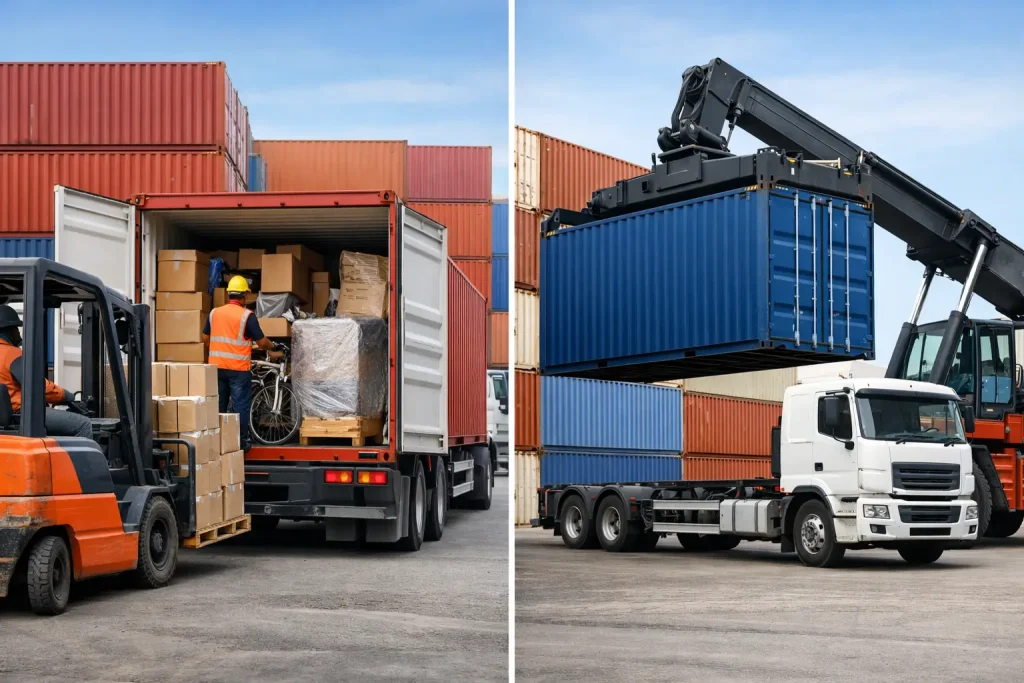
Shared container moving means your belongings travel in a container with other customers’ shipments. In freight terms, this is often called less than container load, or consolidation. You pay only for the space you use, which makes it a practical solution for smaller household moves, partial relocations, student shipments, or customers sending only selected items.
Full container moving means you book an entire container for your shipment alone. This is commonly arranged as a 20-foot or 40-foot container, depending on your load volume. Your goods are packed, loaded, sealed, and moved as one dedicated shipment, giving you greater control over scheduling and cargo handling.
Neither option is automatically better. The better choice is the one that fits your volume, timeline, and risk tolerance.
Cost differences in shared container vs full container moving
For most customers, cost is the first question. Shared container shipping usually has the lower upfront price because you are paying only for the portion of the container your goods occupy. If you are moving a studio apartment, a few rooms of furniture, or personal effects rather than a full household, this can significantly reduce transport costs.
That said, lower upfront cost does not always mean lower total move cost. Consolidated shipments involve cargo grouping, warehouse handling, loading coordination, and deconsolidation at destination. Those stages can add handling fees and may affect delivery speed. If delays create temporary housing costs, storage needs, or replacement purchases while waiting for your shipment, the financial picture changes.
Full container moving generally costs more at the booking stage, but it can be more cost-efficient for larger shipments. Once your volume reaches a certain threshold, paying for dedicated container space often makes more sense than paying for a large share of a consolidated load. Families relocating from Singapore to the US, UK, Australia, or the UAE often reach that tipping point quickly, especially when shipping furniture, appliances, and children’s items together.
Speed and scheduling are where the gap becomes clear
If timing matters, full container service often has the advantage. Your shipment is not waiting for other customers’ cargo to be grouped. Once your packing, documentation, and vessel booking are aligned, the container can move on its own schedule.
Shared container service usually takes longer because consolidation depends on compatible shipments moving on the same trade lane. Your goods may wait at origin for the container to be filled, and destination delivery may also depend on deconsolidation timing and customs processing across multiple consignments. For flexible movers, that trade-off can be worth the savings. For corporate relocations, school-start deadlines, lease cutoffs, or assignment start dates, it may not be.
This is where experienced move management matters. A trusted international mover should explain realistic transit windows, not just quote a best-case estimate. That protects you from planning your arrival around an overly optimistic shipping timeline.
Handling, protection, and shipment control
Protection is not just about wrapping furniture well. It is also about reducing avoidable handling points.
With full container shipping, your goods are loaded into a dedicated container and generally remain together through the line-haul journey. Fewer touchpoints can mean less risk of handling-related damage, mislabeling, or shipment separation. This is especially valuable for full-home relocations, higher-value household goods, or customers who want tighter chain-of-custody control.
Shared container shipping can still be managed safely when professional export packing, inventory control, and proper liftvans or crating are used. But it usually involves more coordination and more movement through consolidation systems. That does not mean it is unsafe. It means professional packing standards and disciplined shipment management become even more important.
For that reason, customers should not evaluate container options in isolation. The shipping model and the mover’s operating standards go together. A lower-cost shared shipment handled poorly is far more expensive in the long run than a well-managed move with clear accountability.
When shared container moving makes sense
Shared container moving is a strong fit when you are not relocating an entire household or when budget efficiency matters more than strict delivery speed. This often applies to single professionals on assignment, students, couples in furnished housing, or families sending a partial shipment ahead of a later full move.
It also makes sense when the destination has established consolidation lanes and you have enough timeline flexibility to absorb a wider delivery window. If you can live comfortably with a staged arrival of goods, shared container service can be a practical and financially sound choice.
The key is planning around reality. If you choose a shared container, build in lead time. Ship only what you truly need, and keep immediate essentials with you or send them separately by air if necessary.
When full container moving is the better choice
Full container moving is usually the better solution for larger households, office relocations, time-sensitive assignments, and customers who want tighter control over the move. If you are moving a family home with substantial furniture, children’s belongings, work equipment, or fragile items, dedicated container space supports a more direct and predictable logistics plan.
It is also a smart option when destination coordination needs to be precise. If your home delivery, lease start, customs timing, and unpacking schedule all need to line up closely, a full container gives your moving partner more control over execution.
Many experienced international movers will recommend a full container even when the shipment is only close to filling one, because the gains in handling efficiency, protection, and schedule control can outweigh the extra freight cost. That recommendation should be based on your move profile, not a generic sales pitch.
Customs and destination delivery considerations
Customers often focus on the ocean freight portion, but customs clearance and final delivery matter just as much. Shared shipments can involve more layered documentation because multiple customers’ cargo is moving in a single container. That does not make customs impossible, but it does increase the need for clean paperwork, accurate inventories, and disciplined coordination.
Full container shipments can be simpler to manage from a shipment identity standpoint because the container is tied to a single move. For customers entering countries with stricter import rules or more documentation sensitivity, that simplicity can help reduce avoidable friction.
This is why a single accountable relocation partner is valuable. Packing, documentation, freight booking, customs coordination, and destination delivery all affect each other. When those functions are fragmented across different vendors, small errors become expensive delays.
How to choose the right option for your move
Start with volume. If you are moving only part of a household, shared shipping may be the right economic decision. If you are moving a full family residence, compare the real threshold where a dedicated container becomes the smarter value.
Then look at timing. If your move can absorb variability, consolidation may work well. If you need a tighter transit plan, full container service is often the safer operational choice.
Next, consider what you are shipping. Standard household goods with flexible delivery needs are one thing. High-value furniture, sensitive items, or a shipment that must arrive together is another. The more control and consistency you need, the stronger the case for a full container.
Finally, choose a mover that can assess the shipment properly and manage the entire chain. Astro Movers supports customers across 900+ destinations with structured relocation planning, professional packing, international shipping coordination, customs management, and delivery oversight. That kind of end-to-end control matters because the best shipping method is only as good as the team executing it.
The smartest move is not automatically the cheapest container or the biggest one. It is the shipping plan that protects your timeline, your budget, and your belongings with the least friction from door to destination.
