
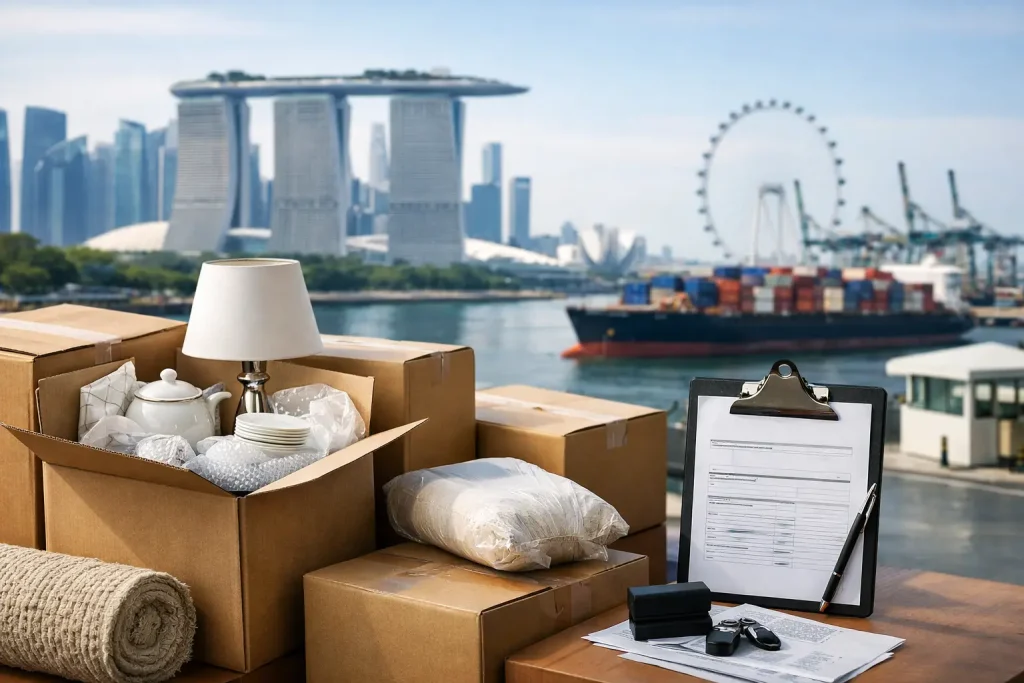
A shipment can be packed perfectly, loaded on time, and booked on the right vessel – then sit still because one customs document is missing. For families and expats moving into Singapore, that is usually the moment the move becomes stressful. Customs clearance is where planning either protects your schedule or disrupts it.
That is why customs clearance for household goods Singapore should never be treated as a last-minute admin task. It is a core part of international move management. If you understand what customs is checking, what paperwork is expected, and where delays usually happen, you put yourself in a much stronger position before your shipment even leaves origin.
What customs clearance for household goods Singapore actually involves
At a practical level, customs clearance means securing the approvals needed for your personal effects to enter Singapore lawfully. That process includes document review, shipment declaration, permit handling where required, inspection coordination if selected, and release for onward delivery.
For household goods, customs is not simply checking whether boxes arrived. Authorities want a clear, supportable view of what is entering the country, who owns it, whether it is used personal property, and whether any restricted or taxable items are included. The more accurate the shipment profile, the smoother the clearance tends to be.
This is where many private movers underestimate the process. A household shipment is personal, but customs handles it with the same compliance discipline applied to commercial cargo. Vague packing lists, inconsistent names across documents, and unclear visa or residency status can all slow release.
Why household shipments get delayed in Singapore
Most delays come from preventable issues rather than unusual customs action. The first problem is document mismatch. If the passport name, shipping documents, and destination contact details do not line up cleanly, customs may request clarification before release.
The second issue is poor inventory quality. A packing list that says “miscellaneous household goods” across multiple cartons is weak support for declaration. Customs clearance works better when the contents are described in a way that is honest, readable, and specific enough to assess.
The third issue is restricted or sensitive goods. Alcohol, tobacco, food products, controlled items, and some electronics can trigger additional requirements. Even if the majority of the shipment is standard used household property, one undeclared item can create a broader hold.
Timing also matters. If the consignee has not yet arrived in Singapore, or does not yet have the supporting immigration or residential documents expected for clearance, the shipment may need to wait. That does not always stop a move, but it changes how the shipment should be scheduled and documented.
Documents commonly required for customs clearance for household goods Singapore
The exact paperwork depends on shipment type, residency status, and whether the move is inbound or outbound, but the core principle stays the same – customs needs a complete file that supports both identity and shipment contents.
In most cases, movers should expect to provide a passport copy, visa or employment pass details where relevant, a detailed packing list or inventory, shipping documents, and a local delivery address in Singapore. Some shipments may also require a signed authorization allowing a moving partner to act on the customers behalf for customs formalities.
Proof that the goods are personal and used can be important. Customs treatment is not based on what a customer says informally. It depends on what the documents show and how the shipment is declared. Brand-new boxed goods, high-value electronics, or items that appear purchased for resale are more likely to attract closer review.
For that reason, experienced move planning starts well before departure. A strong customs file is built during survey, packing preparation, and booking – not after the container lands.
Duties and taxes – when it depends
One of the most common questions is whether household goods entering Singapore are duty-free. The honest answer is that it depends on what is in the shipment and how it is classified.
Used personal household goods may be treated differently from dutiable products such as liquor or tobacco. Goods that appear new, commercial in nature, or outside standard household-use categories may also be assessed differently. If there are luxury items, large quantities of one product type, or unusually high declared values, expect more scrutiny.
This is why blanket promises are risky. No serious relocation partner should tell every customer the same thing regardless of shipment profile. Proper customs handling means reviewing the inventory carefully, flagging possible duty exposures early, and preparing the customer for realistic outcomes.
That approach protects budgets as much as timelines. A move feels more controlled when there are no last-minute surprises around taxes, inspections, or storage caused by customs delay.
Packing decisions affect customs outcomes
People usually think of packing as a protection issue. It is also a customs issue.
Professional packing creates a clearer inventory, more consistent carton labeling, and better shipment visibility. When household goods are packed in a structured way, it becomes easier to describe contents accurately and respond quickly if customs requests clarification or inspection. By contrast, owner-packed shipments often create more ambiguity. Boxes are labeled too broadly, high-risk items get mixed in with everyday goods, and no one remembers what carton 47 actually contains.
There is also a risk trade-off here. Owner-packing may seem cheaper at the start, but if unclear contents cause customs delay, the savings can disappear fast through storage, rehandling, or missed delivery windows. For international moves into Singapore, packing quality and customs readiness are closely connected.
Air freight vs sea freight – customs is not identical
Both air and sea shipments need customs clearance, but the pressure points are different.
Air freight is usually chosen for urgency, smaller volumes, or critical personal items needed soon after arrival. Because timing is tighter, document errors are more costly. A missing file on an air shipment can be especially frustrating because customers selected air freight specifically to reduce waiting time.
Sea freight, especially for full household moves, allows larger volumes and often better value for money. But larger shipments usually mean more detailed inventories, more cartons, and a broader chance that one restricted item has been packed by mistake. Sea freight also requires good coordination between vessel schedule, arrival notice, customs processing, and final delivery booking.
Neither mode is automatically easier. The right choice depends on volume, urgency, budget, and how ready the customs documentation is at origin.
How a professional mover reduces customs risk
The strongest relocation support does not start at the port. It starts with controlling the move from consultation onward.
A professional moving and freight coordination partner should review the move scope, identify shipment type, assess likely customs requirements, structure the packing inventory properly, prepare documentation, monitor arrival timing, and manage release through to delivery. That single-point accountability matters because customs problems rarely stay isolated. Once clearance slips, delivery appointments, storage planning, and family schedules can all be affected.
For expats and corporate mobility teams, the real value is predictability. You do not just need someone to ship boxes. You need a partner that sees customs as one operational stage in a larger cross-border move. That is where a logistics-led mover such as Astro Movers adds real control – not by making risky promises, but by organizing the process so fewer issues appear in the first place.
What customers should do before shipping household goods to Singapore
The best results come from early preparation. Confirm your immigration status and expected arrival timing. Be transparent about what you are shipping, especially if there are alcohol, tobacco, electronics, food items, collectibles, or newly purchased goods. Review your inventory before packing day, not after dispatch.
It also helps to decide whether speed or cost matters more for this move. If you need immediate access to essentials, split shipments strategically rather than forcing everything into one channel. If your priority is budget efficiency, allow enough lead time for documentation and scheduling so customs processing does not become a rushed exercise.
Most of all, choose a mover that takes ownership of customs coordination instead of treating it as a side service. Household goods clearance in Singapore rewards precision. The more disciplined the preparation, the faster your move starts feeling settled instead of stuck.
A well-managed relocation is not just about getting belongings across borders. It is about getting them cleared, released, and delivered with your timeline still intact.
