
A teak dining table, a carved cabinet, or a family heirloom can be far more difficult to move internationally than it looks. The question, “do i need fumigation for wooden furniture shipping,” has no one-size-fits-all answer because the requirement depends on the furniture itself, how it is packed, and the rules at destination. Treating an item unnecessarily can add cost and delay. Missing a required treatment can lead to inspection, quarantine, re-export, or destruction at the border.
For an international household move, the safest approach is to assess wooden furniture before packing begins. A professional mover should identify whether your shipment contains finished furniture, raw timber, bamboo, rattan, wooden crates, or any items showing signs of pest activity. These categories can be treated very differently by customs and agricultural authorities.
Do I Need Fumigation for Wooden Furniture Shipping?
Usually, finished household furniture does not automatically require fumigation. A painted, varnished, sealed, or fully manufactured wooden table, bed frame, wardrobe, or chair is generally considered lower risk than untreated timber. However, “usually” is not a guarantee. Countries with strict biosecurity laws can inspect any wood-based household goods, especially if officers see bark, boreholes, dust, insect damage, soil, mold, or visible pests.
The destination country has the final authority. Australia and New Zealand are particularly rigorous about biosecurity, while other destinations may focus more closely on untreated wood, antique pieces, or wooden packaging. Requirements can also change, so prior shipments or advice from friends should not be treated as current clearance guidance.
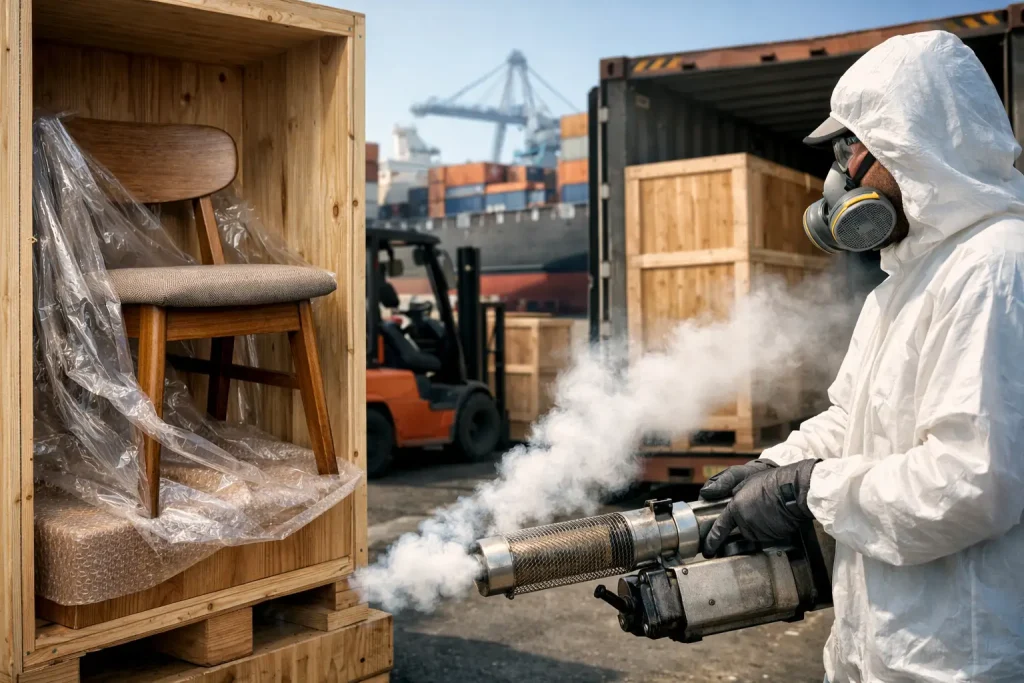
Fumigation may be required when furniture is made from unfinished or raw wood, includes bark or natural edges, has evidence of insects, or is being shipped to a country that requests a treatment certificate. It may also be recommended where an antique or handcrafted item cannot be confidently verified as pest-free.
A treatment certificate does not automatically make every item admissible. Customs officers may still inspect the shipment and can order further action if the furniture is contaminated or the paperwork does not meet local standards.
Furniture Treatment and Wooden Packing Are Different Issues
One of the most common sources of confusion is the difference between fumigating furniture and treating the wood used to pack it.
International freight commonly uses wooden pallets, skids, crates, and bracing. These materials are usually subject to ISPM 15, the international standard designed to prevent pests from traveling in solid wood packaging. Compliant packaging is heat-treated or fumigated and marked with a recognized stamp. That stamp applies to the packing material, not necessarily to the furniture inside it.
For example, your finished wooden dresser may not need fumigation, but a custom-made pine crate around it may need ISPM 15 treatment and marking. This is why professionally managed packing matters. A shipment can be held even when the household goods are acceptable if the crate, pallet, or loose timber blocking does not comply.
Plywood, particleboard, oriented strand board, and other engineered wood products are often exempt from ISPM 15 because the manufacturing process reduces pest risk. Even so, packing decisions should be made according to the destination, shipping method, and the condition of the goods – not assumptions based on the material name alone.
When Fumigation Is More Likely to Be Required
Finished furniture in clean condition often clears without treatment, but certain situations deserve closer review before your move is booked.
Raw, rustic, and bark-covered wood
Live-edge tables, reclaimed timber furniture, rustic benches, driftwood décor, and pieces that retain bark can raise immediate biosecurity concerns. These items may carry insects or eggs in crevices that are impossible to see during a standard household survey. Some countries restrict them altogether, while others permit them with approved treatment and documentation.
Antiques and handcrafted pieces
Older furniture can be valuable, but age also makes condition harder to verify. Pinholes, powdery residue, and hollow-sounding sections may indicate wood-boring insects. A qualified assessment can determine whether treatment is appropriate and whether the item should be professionally cleaned, sealed, or repaired before shipping.
Antiques may also involve separate issues, including cultural-property controls or protected-species rules if they contain ivory, tortoiseshell, certain woods, or animal-based finishes. Fumigation addresses pests only. It does not resolve import restrictions on regulated materials.
Furniture stored in garages, sheds, or damp spaces
Items kept in outdoor storage, basements, sheds, or humid conditions deserve extra attention. Soil, leaves, cobwebs, mold, and insects can all trigger an inspection. Thorough cleaning is often just as important as fumigation. Customs authorities are concerned with what arrives on the item, not only what the item is made from.
Destinations with strict agricultural controls
For moves to countries with high biosecurity standards, advance planning is essential. Border authorities may require declarations, treatment records, inspections on arrival, or additional fees. Air freight can arrive quickly, but it does not avoid agricultural controls. Ocean freight allows more scheduling flexibility, yet a container can still be delayed at port if wooden goods require examination.
Fumigation Is Not Always the Best Answer
Fumigation is a controlled pest-management process, not a blanket shipping upgrade. Depending on the furniture and destination rule, heat treatment, cleaning, inspection, or an approved alternative treatment may be more suitable. The right option must satisfy the destination authority while protecting the item’s finish and structural condition.
Certain finishes, veneers, adhesives, upholstery materials, and antique surfaces can react poorly to inappropriate treatment. Heat and chemicals can cause discoloration, cracking, odors, or damage if the process is not selected and performed correctly. Never arrange an informal treatment without confirming whether the provider is recognized for export purposes and whether the resulting certificate will be accepted at destination.
A reputable relocation provider will also avoid promising that fumigation guarantees customs clearance. Clearance remains subject to border inspection, declarations, and the condition of the shipment when it arrives.
Documentation That Helps Prevent Delays
Wooden furniture shipments need clear, consistent paperwork. The exact documents vary by lane, but your move file may need the inventory, a description of materials, photographs of unusual items, a treatment certificate where required, and proof that wooden packing complies with ISPM 15.
Descriptions should be specific. “Wood furniture” is less useful than “one sealed teak dining table,” “two painted pine bedside tables,” or “one untreated reclaimed-wood bench.” Accurate descriptions help your move manager identify issues before loading rather than after the shipment reaches customs.
If treatment is required, the certificate should match the shipment details and show the treatment provider, treatment type, date, and any other information required by the importing country. Keep copies with your shipping documentation. A missing or inconsistent certificate can be as problematic as having no certificate at all.
How to Prepare Wooden Furniture for International Shipping
Start the process before your pre-move survey. Take clear photos of solid-wood, antique, handmade, rustic, or unfinished pieces. Tell your mover where each item has been stored and point out any visible damage, insect holes, or suspected mold. Early disclosure gives the relocation team time to verify destination requirements and arrange compliant handling.
Before packing, furniture should be cleaned thoroughly. Remove soil from legs, drawers, carved sections, and hardware. Empty drawers and inspect hidden spaces, especially in older cabinets and chests. Do not conceal pest damage in wrapping or assume that a fresh coat of polish will resolve an agricultural concern.
Your mover should then determine the appropriate packing method. For many household moves, export-grade wrapping and compliant crating are enough. For sensitive or high-value pieces, custom crating may provide better protection, provided the crate uses approved wood packaging material. The goal is not simply to get the furniture into a container. It is to deliver it in a condition and format that can move through customs without avoidable disruption.
Get a Clear Answer Before Your Shipment Is Packed
International furniture shipping works best when customs compliance, packing, freight booking, and delivery are managed as one plan. Astro Movers assesses household goods in advance, coordinates export-standard packing, and helps customers understand when destination treatment or documentation may be needed. That single-point approach reduces the risk of learning about a wood-related issue after your shipment has already left Singapore.
If you are moving a standard sealed dining set, fumigation may not be necessary. If you are shipping unfinished timber, a bark-edged table, or an antique cabinet with signs of insect activity, treat it as a priority item from the start. A proper pre-shipment review gives you the best chance to protect the furniture you value and keep your international move on schedule.
