
A dining table can survive years of family meals and still be damaged by one poorly secured truck load. That is why knowing how to protect furniture during transit is not simply about adding more bubble wrap. It is about matching the packing, handling, loading, and shipping method to each piece of furniture and the journey ahead.
For an international relocation from Singapore, furniture may be handled several times before it reaches its final home. It can move from residence to truck, warehouse, container or air cargo facility, customs inspection area, destination warehouse, and delivery vehicle. Every handoff creates a risk if the item has not been prepared, packed, and documented correctly.
How to Protect Furniture During Transit: Start With a Move Assessment
Protection begins before packing day. Walk through your home and identify furniture that is valuable, fragile, oversized, or difficult to replace. This includes solid wood dining sets, antiques, glass display cabinets, marble-top tables, upholstered sofas, office desks, and modular wardrobes.
A proper assessment determines whether each item should be shipped assembled, partially dismantled, or fully disassembled. Large furniture often travels more safely when broken down into manageable components. A bed frame, for example, is less likely to be strained or scratched when its headboard, footboard, rails, and hardware are packed separately. However, some antique or custom-built pieces can be weakened by repeated disassembly. In those cases, professional wrapping and crating may be the better option.
Measure doorways, elevators, stairwells, and access points at both the origin and destination. A piece that fits easily into your current apartment may not fit through the delivery entrance at your new residence. Knowing this early avoids rushed handling and preventable damage on delivery day.
Clean, Empty, and Prepare Every Item
Dust and grit can create scratches when furniture is wrapped tightly. Wipe down wood, metal, glass, and plastic surfaces before packing. Allow all items to dry completely, especially in Singapore’s humid climate, before covering them for a long ocean shipment.
Empty drawers, cabinets, and shelves unless a moving professional confirms they can remain filled. Heavy drawers can shift in transit, pull loose from runners, or place pressure on the furniture frame. Remove loose shelves, detachable legs, knobs, and glass panels where possible. Pack these separately and label them clearly.
Keep screws, brackets, bolts, and assembly tools in sealed, labeled bags. Each bag should be attached securely to the related furniture component or placed in a numbered hardware box. This small step prevents one of the most common frustrations after an international move: having the furniture arrive safely but lacking the hardware to reassemble it.
Use the Right Materials for the Furniture and the Route
Not all packing materials provide the same protection. A thin furniture cover may be suitable for a short local move, but it is not enough for furniture traveling through ports, warehouses, and international freight networks. Professional packing combines layers, with each one serving a different purpose.
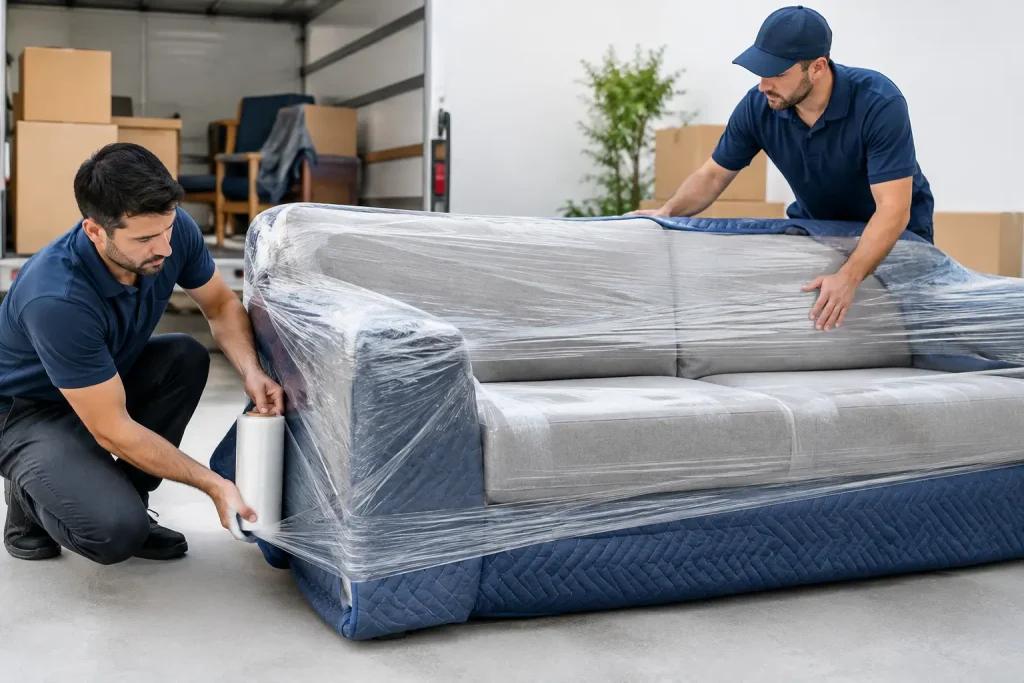
Start with a clean protective layer against finished surfaces. Moving blankets or padded furniture pads protect wood and upholstery from abrasion. Corner protectors are especially useful for tables, cabinets, and headboards because corners absorb much of the impact when an item is moved or stacked.
Add stretch wrap around padded pieces to hold the protective materials in place. Stretch wrap should not be applied directly to polished wood, leather, or delicate finishes for extended periods, as trapped moisture and heat can affect the surface. For long-distance shipping, breathable materials and appropriate outer protection matter more than simply wrapping an item as tightly as possible.
Glass, mirrors, and marble require a higher level of care. Glass tabletops should be removed, wrapped with cushioning material, protected at the edges, and packed vertically in purpose-built cartons or crates. Marble tops need rigid support across their full surface. Laying them flat without proper reinforcement can increase the chance of cracking under vibration or weight.
For high-value antiques, artwork-integrated furniture, fragile veneers, or unusually shaped pieces, custom crating may be justified. It adds cost and volume, but it provides a rigid protective shell that standard wrapping cannot match. The right decision depends on replacement value, sentimental value, shipping method, and destination conditions.
Disassemble Without Creating New Risks
Disassembly reduces the chance of damage only when it is done methodically. Never force joints, remove structural elements without understanding the construction, or use improvised tools on delicate finishes.
Photograph furniture before it is taken apart, including close-up images of complex fittings. Label each component using a simple system, such as “Desk A – Left Panel” and “Desk A – Hardware.” Protect exposed edges after dismantling, since these are often the areas most vulnerable to chips and dents.
For office relocations, label desks, task chairs, storage units, and workstations by employee, department, or floor plan location. This protects more than the furniture itself. It reduces confusion during delivery and allows teams to resume operations faster.
Secure Furniture Correctly During Loading
Even excellent wrapping can fail if furniture is loaded carelessly. The goal inside a moving truck or shipping container is to eliminate movement. Furniture should be positioned according to weight, shape, fragility, and unloading sequence.
Heavy, stable items belong on the floor, with lighter and more fragile items protected above or around them. Sofas and mattresses may provide useful buffering, but they should never be used as a substitute for proper securing. Tables should be protected so that legs do not carry unnecessary load, and chairs should be nested only when their frames and finish can tolerate it.
Professional movers use straps, blocking, bracing, and load bars to prevent shifting. Gaps between items are not harmless. During braking, turning, lifting, or vessel movement, even a few inches of space can allow furniture to slide, collide, or tip. Void-fill materials and careful load planning keep the shipment stable from collection through delivery.
Container loading requires particular discipline. Ocean freight can involve vibration, changing temperatures, and moisture exposure. Furniture should be elevated or protected from direct contact with container floors and walls where appropriate. Desiccants and moisture-control measures may also be considered for long sea routes, particularly for wood furniture, textiles, and leather goods.
Choose the Shipping Method With Protection in Mind
Air freight is generally faster and involves less time in transit, but it may have stricter size and weight limits and higher costs. Ocean freight is usually more economical for a full household move, yet it requires more durable preparation because the shipment will spend longer in transit and may move through multiple handling points.
A full container can offer greater control for a large household relocation because your goods are loaded as one dedicated shipment. A shared container or consolidated shipment can be cost-effective for a smaller move, but packing quality becomes even more critical because goods may be loaded alongside other consignments.
This is where an international mover with freight-forwarding capability adds practical value. Astro Movers coordinates packing, loading, shipping, customs documentation, and destination delivery as one managed process, so protection standards do not stop at the front door.
Document Condition and Confirm Insurance Coverage
Take dated photographs of valuable furniture before packing, including existing marks or wear. This creates a clear condition record and helps prevent disputes later. Keep invoices, appraisals, or replacement-value information for pieces that are expensive or difficult to replace.
Transit insurance should be reviewed before the shipment leaves. Policies differ in what they cover, how values must be declared, and what evidence is needed if a claim is required. Do not assume standard carrier liability will reflect the actual replacement cost of your furniture. For many international moves, declared-value coverage offers greater protection, but the best option depends on the shipment value and policy terms.
At delivery, inspect items before signing off whenever possible. Check corners, legs, glass, upholstery, drawers, and hardware. If you find damage, record it immediately, take photographs, and follow the mover’s claims process without delay.
Protect the Final Delivery, Too
Furniture protection does not end when the shipment reaches the destination country. Delivery crews should protect floors, door frames, elevators, and tight access areas before bringing large pieces inside. Rushed final-mile handling is a frequent cause of scuffed furniture and damaged walls.
Provide your destination floor plan in advance if possible. Clear placement instructions reduce unnecessary lifting and repositioning. The fewer times a heavy cabinet or fragile table is moved inside the home, the lower the chance of damage.
The safest move is rarely the one with the most packing material. It is the one with a clear plan, trained handling, secure loading, and accountability at every stage. When furniture is prepared for the actual demands of international transit, it has a far better chance of arriving ready for the next chapter of your life.
