
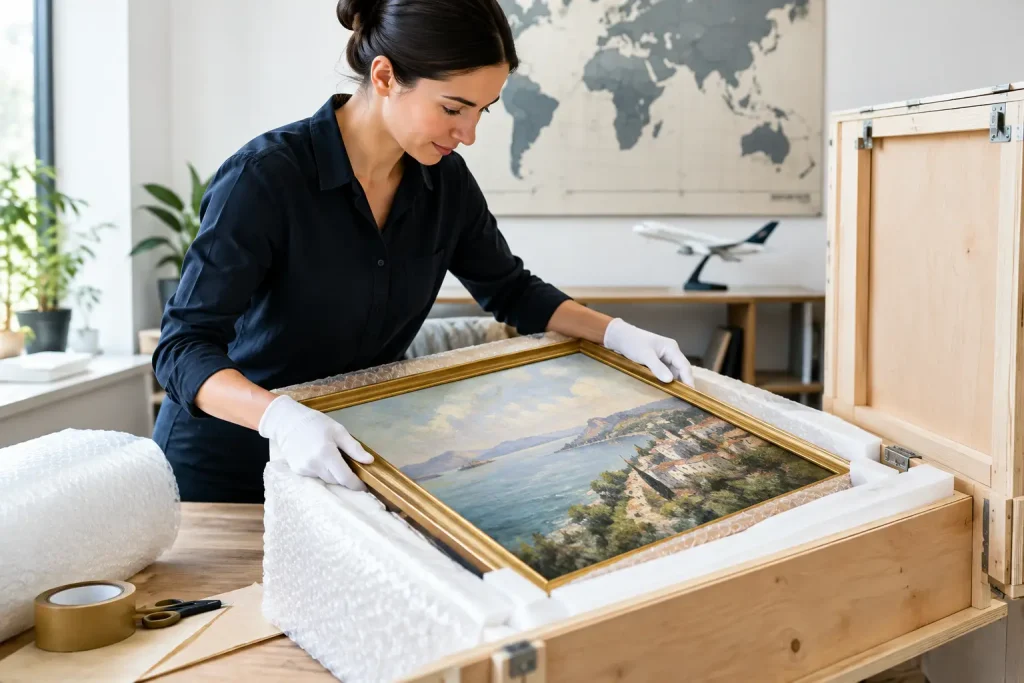
A framed canvas can be replaced. A one-of-one painting, family heirloom, sculpture, or limited-edition print cannot. That is why knowing how to ship artwork internationally starts with more than choosing a courier and printing a label. It requires a protection plan, accurate paperwork, and a shipping method matched to the artwork’s value, size, material, and destination.
For expatriates leaving Singapore, collectors relocating a small collection, and businesses moving decorative or corporate art, the objective is simple: the artwork must arrive in the same condition, clear customs without unnecessary delay, and remain properly insured throughout the journey. The execution, however, depends on the details.
How to Ship Artwork Internationally: Start With an Assessment
Before packing begins, document every item. Take clear photographs of the front, back, corners, frame, signature, and any existing marks or damage. Record the dimensions, weight, medium, artist, year if known, and declared value. This creates a condition record before the artwork enters the moving or freight process.
The material matters. An oil painting may require protection from pressure and temperature shifts. A glazed frame has breakage risks that a canvas does not. Bronze, ceramic, glass, wood, and mixed-media works each need different internal support and crate design. Do not treat all art as a standard household item just because it hangs on a wall.
Value also changes the shipping approach. A decorative print with modest replacement value may travel securely in a reinforced carton. A high-value original, oversized artwork, or fragile sculpture may require a custom wooden crate, specialized handling, and a more controlled freight arrangement. The right plan is based on risk, not simply the lowest transport price.
Choose Air Freight or Ocean Freight Based on the Shipment
International artwork shipping usually moves by air freight, ocean freight, or as part of an international household relocation shipment. Each option has a practical place.
Air freight is generally the better choice for individual artworks, urgent relocations, and higher-value pieces where reducing transit time is a priority. It is often more expensive, particularly for large framed works or crates, because carriers charge based on actual or volumetric weight. A lightweight but bulky crate can therefore cost more than expected.
Ocean freight is commonly more cost-effective for a larger collection or artwork moving with a full household shipment. It is suitable when timing is flexible and the shipment can be professionally packed for a longer journey. Ocean transit involves more handling points and longer exposure to humidity and changing conditions, so packing quality is critical.
For a small number of pieces, a consolidated or shared container shipment may be an appropriate balance between cost and protection. For a full relocation, integrating artwork into the overall move plan can simplify collection, packing, documentation, customs coordination, and final delivery. A professional international mover can determine whether the art should travel with household goods or as a separately managed shipment.
Professional Packing Is the Main Protection Layer
Most damage does not happen because a plane or vessel moves. It happens when an item is poorly prepared for the handling that takes place before and after transport. Corners strike hard surfaces, frames flex, glass cracks, and loose items shift inside cartons when packing is not designed for international freight conditions.
For framed paintings and prints, professional packers typically protect the face with a non-abrasive barrier, add corner protection, wrap the frame with cushioning materials, and secure it inside a fitted carton or crate. Glass-fronted artwork may need additional surface protection to reduce the impact of shattered glass if breakage occurs. A canvas should never be pressed directly against bubble wrap or materials that can mark the painted surface.
Sculptures require immobilization. The packing should support strong structural areas without placing pressure on delicate projections, handles, limbs, or surface details. For irregularly shaped pieces, a custom crate with internal bracing is often the responsible option.
Wooden crates are especially valuable for oversized, fragile, or high-value art. They offer rigid external protection, reduce movement, and can be built to the item’s exact dimensions. However, any wood packaging used for international shipping may need to meet destination phytosanitary rules. Using compliant treated wood prevents avoidable customs or quarantine issues.
Do not rely on a suitcase, a thin moving box, or a courier’s standard packaging for artwork that matters. The apparent savings can disappear immediately after one damaged corner or cracked frame.
Prepare Customs Documents Before Collection Day
Artwork can attract extra attention at customs because officials need to determine what the item is, where it came from, whether it has commercial value, and whether any import restrictions apply. Clear documentation is the best way to keep the process organized.
For most personal artwork shipments, the core documents include a detailed packing inventory, commercial or pro forma invoice, declared value, proof of ownership where available, and the shipper’s identification or relocation documents. The inventory should describe each item accurately. “Painting” is often too vague. A better description may include the medium, framed or unframed status, dimensions, artist if known, and whether it is a personal household effect or an item for sale.
The declared value must be realistic and consistent across the paperwork. Under-declaring artwork to reduce duties or shipping costs can create insurance problems and may lead to customs penalties. Overstating value without support can also cause scrutiny. Appraisals, purchase invoices, gallery receipts, and provenance records are useful for valuable works.
Some categories need additional review. Antique objects may be subject to cultural property laws. Artwork containing ivory, tortoiseshell, certain animal materials, feathers, or protected wood may require permits or may be prohibited altogether. Even an old decorative frame can create compliance questions if it contains restricted materials.
Import taxes and duty treatment depend on the destination and the shipper’s residency status. Personal effects moving with an eligible relocation may qualify for relief in some countries, but eligibility is never automatic. If the art is being sold, exhibited, imported temporarily, or moved for a business, different customs rules may apply.
Insure the Artwork for International Transit
Standard carrier liability is not the same as full-value protection. It may be limited by weight, shipment terms, or exclusions that leave a valuable painting substantially underprotected. Before shipping, confirm what coverage applies and what the policy requires in the event of damage or loss.
A proper transit insurance plan should reflect the replacement or appraised value of the artwork. Ask whether it covers door-to-door transit, professional packing, water damage, breakage, theft, and storage if the shipment is delayed or held before delivery. Policies can vary, and exclusions are meaningful when the item is irreplaceable.
Documentation protects your ability to make a claim. Keep the pre-shipment photos, appraisals, invoices, inventory, and packing records. At delivery, inspect crates and cartons before signing a clean receipt. If you see damage to the exterior packaging, note it immediately and photograph it before unpacking.
Plan for Climate, Storage, and Final Delivery
International transit is only one stage. Artwork may wait at an origin warehouse, airport terminal, port facility, customs area, or destination storage location. If the piece is sensitive to humidity or temperature, discuss this before booking. Oil paintings, wood panels, paper works, and certain mixed-media pieces may require more careful handling than mass-produced wall décor.
The destination address matters as well. A large crate may not fit into an elevator, through a stairwell, or around a tight hallway. Measure access points before the shipment arrives. If the artwork needs white-glove placement, unpacking, debris removal, or wall mounting, schedule those requirements in advance rather than leaving them to delivery day.
For complex relocations, Astro Movers can coordinate specialist packing, freight selection, customs documentation, insurance support, and delivery as part of one managed international move. Having one accountable team reduces the risk of a gap between the packing company, freight provider, customs agent, and destination delivery crew.
Common Mistakes That Put Artwork at Risk
The most expensive errors are usually preventable. They include using generic boxes for fragile framed art, failing to photograph condition before shipment, declaring an unrealistic value, and assuming that household-goods rules apply to every artwork.
Another common mistake is booking transport before confirming customs restrictions. A destination country may have rules affecting antiques, organic materials, or commercial imports that change the documentation and timeline. The shipment should be reviewed before collection, not after it reaches the airport or port.
Finally, do not wait until the week of a relocation to arrange art shipping. Custom crates, valuations, permits, and freight bookings may require lead time, especially during peak moving periods. Early planning gives you better control over cost, transit options, and protective packing.
Your artwork deserves a shipping plan built around its real value, not its box size. Start with an accurate inventory and condition record, then let the packing, documentation, insurance, and freight method follow from that foundation.
